
Nitrogen Purging and Blanketing: An Industrial Buyer’s Guide
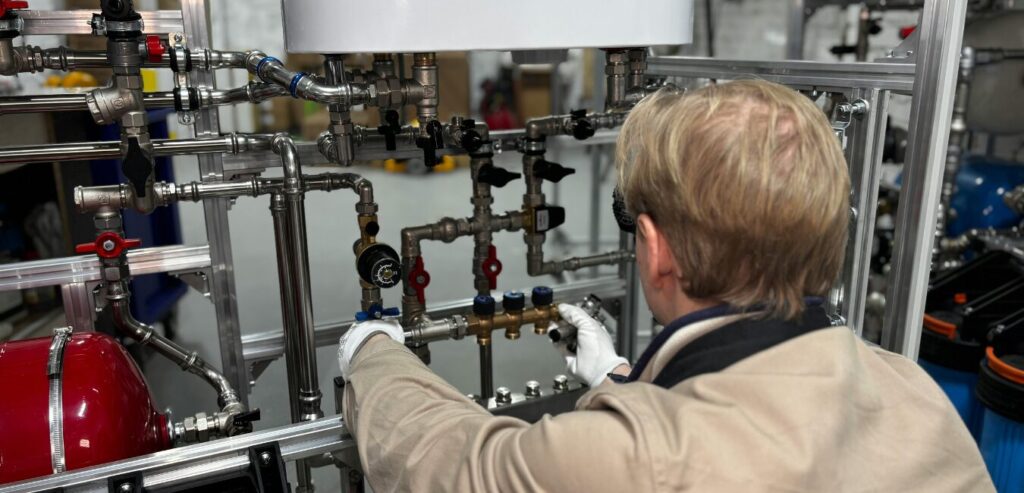
Nitrogen is the workhorse of industrial inerting. It displaces oxygen, prevents oxidation, and does not react with the materials it protects. For pipe welders, it keeps the back side of a stainless joint from turning into a scale-covered mess. For storage tank operators, it keeps flammable vapors from reaching ignition conditions. For food processors, it extends shelf life by replacing oxygen inside packaging.
This post covers the two main industrial nitrogen applications, purging and blanketing, and explains what each one involves, when you need it, and how to source the right supply.
What Is Nitrogen Purging
Nitrogen purging displaces oxygen and moisture from a closed system by flowing nitrogen through it. The goal is to create an inert atmosphere inside the space before, during, or after a process that would be compromised by the presence of air.
The most common industrial nitrogen applications for purging include:
- Weld purging on stainless steel and titanium pipe
- Pre-commissioning purge of pipelines, vessels, and process equipment
- Purging fuel tanks and lines before maintenance or hot work
- Removing oxygen from chemical reactors between batches
- Displacing flammable vapors before cutting or welding on fuel system components
Nitrogen purging and blanketing are related but serve different purposes. Purging is an active process: you flow nitrogen through a system to push out the atmosphere you do not want. Blanketing is a passive hold: you maintain a nitrogen atmosphere over a surface to keep oxygen away continuously.
Nitrogen Purge Welding Pipe
For welders and fabricators, nitrogen purge welding pipe is one of the most common industrial nitrogen applications. When TIG welding stainless steel or titanium pipe, the back side of the weld (the root) is exposed to atmosphere inside the pipe. Without a nitrogen purge, that root oxidizes and forms a hard, brittle oxide layer called sugaring that weakens the joint and fails inspection.
The purge process works like this:
- Seal both ends of the pipe section with purge dams (leaving a small vent)
- Flow nitrogen in at a controlled rate
- Monitor oxygen with an analyzer until below 0.5% (some specs require below 50 ppm)
- Begin welding while maintaining nitrogen flow
- Continue purging until the weld has cooled enough to prevent oxidation
The gas needs to be dry and at least 99.5% pure. CryoWeld supplies high-purity nitrogen in multiple cylinder sizes and through bulk delivery for high-volume pipe fabrication.
The flow rate depends on pipe diameter. Smaller pipe (2 inches and under) purges with 5 to 10 CFH. Larger pipes and vessels need proportionally more. Use a flowmeter regulator to control the rate precisely.
What Is Nitrogen Tank Blanketing
Nitrogen tank blanketing maintains a layer of nitrogen gas above the liquid surface inside a storage tank. This nitrogen “blanket” prevents oxygen from contacting the stored product, which serves two purposes:
- Prevents oxidation of oxygen-sensitive chemicals, solvents, and food products
- Keeps flammable vapor concentrations below the lower explosive limit (LEL) by displacing oxygen
Nitrogen tank blanketing is standard practice in:
| Industry | Stored Product | Why Blanketing Is Needed |
|---|---|---|
| Chemical processing | Solvents, resins, reactive chemicals | Prevent oxidation and fire/explosion risk |
| Petroleum | Fuel, crude oil, refined products | Keep vapor space below LEL |
| Food and beverage | Edible oils, wine, juice | Prevent rancidity and oxidation |
| Pharmaceutical | Active ingredients, solvents | Maintain product purity and stability |
| Water treatment | Chemical feed tanks | Prevent degradation of treatment chemicals |
Nitrogen tank blanketing systems use a pressure-regulating valve that admits nitrogen when tank pressure drops (as liquid is withdrawn) and vents when pressure rises (as tank is filled). This maintains a constant, slightly positive nitrogen atmosphere in the headspace.
For continuous nitrogen tank blanketing, bulk liquid nitrogen supply or a nitrogen generator is typically more cost-effective than cylinders. CryoWeld can help you evaluate whether cylinder delivery or bulk supply fits your volume.
Purging vs. Blanketing: When You Need Which
| Factor | Purging | Blanketing |
|---|---|---|
| Purpose | Remove unwanted atmosphere | Maintain inert atmosphere continuously |
| Duration | Temporary (during a process) | Ongoing (as long as product is stored) |
| Flow pattern | Through the system and out a vent | Into headspace, held at slight positive pressure |
| Typical use | Weld prep, pre-commissioning, hot work | Storage tanks, vessels, packaging |
| Nitrogen volume | Moderate (one-time volume exchange) | Continuous (ongoing low-rate supply) |
Understanding the distinction between nitrogen purging and blanketing helps you size the right supply and equipment for your operation.
How to Source Nitrogen for Your Operation
The right supply depends on volume and frequency:
- Occasional purging (a few cylinders per month): standard nitrogen cylinders with a flowmeter regulator
- Regular pipe fabrication (multiple cylinders per week): cylinder delivery on schedule
- Continuous blanketing or high-volume purging: bulk liquid nitrogen delivery or an on-site generator
For most welding shops in the Hudson Valley, cylinder supply covers the need. For larger industrial nitrogen applications, talk to CryoWeld about bulk options.
Getting Nitrogen from CryoWeld
CryoWeld supplies nitrogen in high-pressure cylinders and through bulk delivery for industrial operations across Dutchess, Ulster, Orange, Putnam, and Columbia counties. We stock the regulators, flowmeters, and fittings you need for both nitrogen purging and blanketing applications.
Whether you need nitrogen purge welding pipe supply for a fabrication shop or nitrogen tank blanketing for a storage facility, our gas team can match the delivery format to your usage. Call Poughkeepsie at (845) 473-3357 or Lake Katrine at (845) 336-8680, weekdays 8 to 5.
Frequently Asked Questions
Why is nitrogen used to purge pipe during welding?
Nitrogen displaces the oxygen inside the pipe that would otherwise oxidize the root side of the weld. On stainless steel and titanium, this oxidation creates a brittle layer called sugaring that weakens the joint and fails inspection. Nitrogen purge welding pipe is standard practice for any code-quality stainless or titanium pipe work.
Is nitrogen blanketing the same as nitrogen purging?
No. Purging is a temporary flow of nitrogen through a system to remove unwanted atmosphere. Blanketing is the continuous maintenance of a nitrogen layer above a liquid surface in a storage tank. Both are industrial nitrogen applications, but they serve different purposes and require different equipment setups.
What purity level of nitrogen do I need for weld purging?
At least 99.5% purity for general stainless steel purging. Critical applications (aerospace, pharmaceutical piping) may require 99.99% or higher. The oxygen content inside the purged zone should be monitored with an analyzer and held below the level specified by the welding procedure.
How much nitrogen does it take to purge a pipe section?
It depends on pipe diameter, section length, and how quickly you need the oxygen level to drop. As a general rule, you need to displace the volume of the pipe section 5 to 7 times before oxygen drops below 0.5%. A 4-inch pipe that is 20 feet long holds about 1.75 cubic feet of volume, requiring roughly 9 to 12 cubic feet of nitrogen for a complete purge.
Can I use argon instead of nitrogen for pipe purging?
Yes, argon works for weld purging and is sometimes preferred because it is heavier than air and settles into the pipe more easily. However, argon costs more than nitrogen. For most stainless steel pipe purging, nitrogen is the more cost-effective choice. The end result on the weld root is similar with either gas.
Does CryoWeld deliver nitrogen in bulk for industrial use?
Yes. CryoWeld provides both cylinder delivery and bulk nitrogen supply for industrial operations in the Hudson Valley. For continuous blanketing or high-volume fabrication, bulk delivery is more cost-effective than cycling through individual cylinders.