
Gas Cylinder Rental vs. Purchase: Which Makes Sense for Your Shop
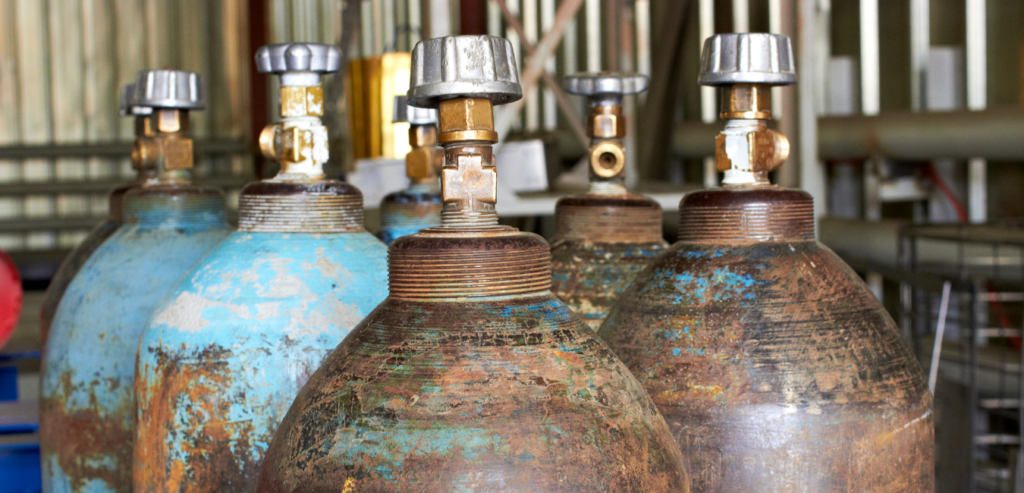
For most welding and fabrication shops, the choice between industrial gas cylinder rental and purchasing comes down to how much gas you use and how long you plan to use it. Renting keeps things simple. Buying saves money over time. A cylinder exchange program sits in the middle. Here is how each option works so you can pick the one that fits your operation.
What Industrial Gas Cylinder Rental Looks Like
With a rental agreement, you pay a monthly or annual fee to use cylinders owned by a gas supplier. The supplier handles hydrostatic testing, valve maintenance, and regulatory compliance. You pay for the gas and the rental on top of it.
Rental works well for shops that:
- Run specialty gases for occasional jobs
- Do not want to track testing dates or certifications
- Need to scale up or down without buying or selling hardware
- Are still testing different gas types for a new process
The downside is cost over time. A shop paying $8 to $12 per month per cylinder will spend more than the purchase price within two to three years. For shops running the same gas year after year, those fees add up.
Buying Cylinders Outright
Owning vs renting welding gas cylinders is mostly a math question. When you buy a cylinder, there is no monthly fee. You pay for gas refills and handle maintenance yourself, including hydrostatic testing every five or ten years depending on the gas.
A standard argon or CO2 cylinder pays for itself in 18 to 30 months compared to rental fees. Owning vs renting welding gas cylinders favors purchase for shops that keep the same gases running daily.
| Situation | Why Ownership Fits |
|---|---|
| Same gas types every day | No rental fees on cylinders you always need |
| Multiple torches or stations | Buying in bulk cuts per-cylinder cost |
| Proper cylinder storage on site | You meet safety and compliance requirements |
| Long-term operation | The investment pays off over years |
The tradeoff is responsibility. Owning vs renting welding gas cylinders means you track test dates, handle transportation to and from the refill point, and replace cylinders that fail inspection.
How Cylinder Exchange Programs Work
A cylinder exchange program sits between renting and buying. You pay a deposit or purchase price on a cylinder, use the gas, and bring the empty back for a full one. There is no monthly rental charge. The cylinder exchange program cost covers the gas and a swap fee.
CryoWeld runs a cylinder exchange and refill program at both Hudson Valley locations. Bring in an empty, pick up a full cylinder of the same size, and pay only for the exchange.
The cylinder exchange program cost is typically lower than monthly rental because you skip the recurring fee. The supplier maintains and tests every cylinder in the pool, so you avoid the compliance burden of full ownership.
For high-volume shops running through multiple cylinders per week, bulk gas delivery eliminates cylinder handling altogether.
Comparing the Three Options
Here is how a gas cylinder lease vs. buy decision looks for a shop running two cylinders of the same gas over one year:
| Factor | Rental | Purchase | Exchange |
|---|---|---|---|
| Upfront cost | Low (deposit) | High (full price) | Medium (deposit or buy) |
| Monthly fees | $8 to $12 per cylinder | None | None |
| Gas cost | Included or separate | Refill fee only | Exchange fee covers gas |
| Maintenance | Supplier | You | Supplier |
| Hydrostatic testing | Supplier | You (every 5 to 10 years) | Supplier |
| Flexibility to switch gases | Return and rent different sizes | Sell or store unused cylinder | Swap at the counter |
The gas cylinder lease vs buy calculation usually favors buying or exchanging for shops that have run the same setup for more than two years. Rental keeps its edge for shops still dialing in their process.
Picking the Right Setup for Your Shop
The gas cylinder lease vs. buy decision comes down to three questions. How many cylinders do you keep on the floor? How long have you been running the same gas types? Do you have the storage and tracking to own cylinders?
If you run two or fewer cylinders and your usage is consistent, ownership or exchange is the better path. If you need four or five different gases and the mix changes by job, renting gives you flexibility without a pile of unused cylinders.
Shops running production lines on high-output welding machines often benefit from a mix. Own your primary gas cylinders and rent specialty sizes you use a few times a year.
Getting the Right Cylinders in the Hudson Valley
CryoWeld stocks cylinders from small portables to full-size tanks, with exchange, refill, and purchase options at both locations. Our counter staff can walk you through exchange pricing, rental numbers, and ownership math based on your gas usage. We serve welders, fabricators, and contractors across Dutchess, Ulster, Orange, Putnam, and Columbia counties.
Need help deciding between renting and buying? Call our Poughkeepsie team at (845) 473-3357 or Lake Katrine at (845) 336-8680, weekdays 8 to 5. Or visit cryoweld.com.
Frequently Asked Questions
Is it cheaper to rent or buy a welding gas cylinder?
Buying is cheaper long-term for shops that use the same gas consistently. A purchased cylinder pays for itself in 18 to 30 months of avoided rental fees. Rental works better for shops that change gas types often or need cylinders for short-term projects only.
What does a cylinder exchange program cost compared to rental?
A cylinder exchange program cost is typically lower because there is no monthly fee. You pay a deposit or purchase price up front, then only the exchange and gas fee each time you swap an empty for a full one.
Who handles testing on a rented cylinder?
The gas supplier handles all testing and maintenance on rented cylinders, including hydrostatic testing, valve service, and replacing units that fail inspection. This is one of the main advantages of renting for shops that do not want to track compliance dates.
Can I switch from renting to owning my cylinders?
Yes. Most suppliers let you return rented cylinders and buy your own. Factor in the cylinder cost, a regulator if you do not already own one, and ongoing refill or exchange fees.
How many cylinders should a small shop keep on hand?
Most small welding shops keep two cylinders of their primary gas, one in use and one as backup. This prevents downtime during a swap or exchange. If you run both MIG and TIG, you may need additional cylinders for each gas type.