
Gas Cylinder Color Codes: How to Identify What’s Inside Before You Connect It
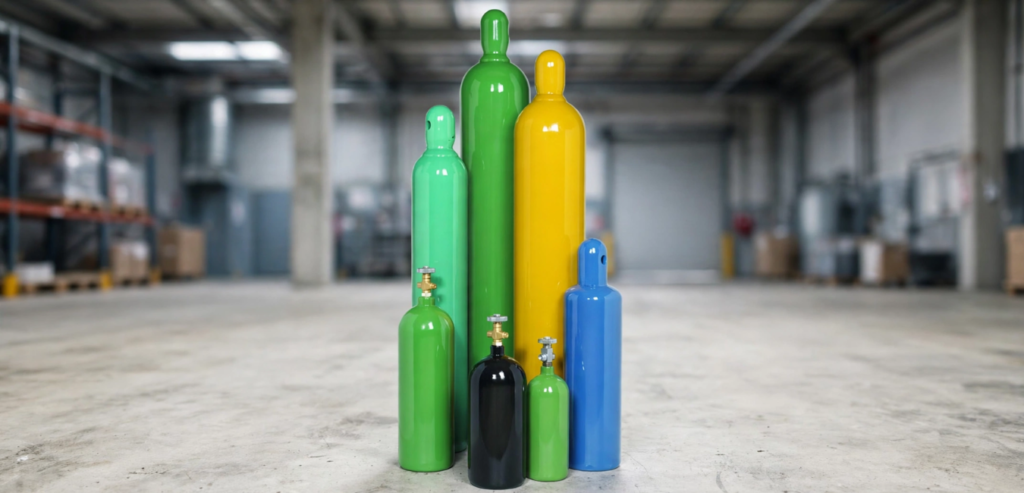
The color of a gas cylinder gives you a quick visual clue about what is inside, but it is not a guarantee. In the United States, gas cylinder color codes follow CGA (Compressed Gas Association) recommendations, not federal law. Suppliers can and do vary. The label on the cylinder is always the definitive identifier. Knowing the common color conventions helps you spot a mismatch before you connect the wrong gas to your regulator.
Common cylinder colors in the US
The CGA recommends voluntary color markings through its C-9 standard. These are the colors you will see most often on cylinders in welding supply shops and industrial settings in the Hudson Valley.
| Gas | Typical US cylinder color | Notes |
|---|---|---|
| Oxygen | Green | Most common in the US; some suppliers use a black body with a white shoulder |
| Acetylene | Maroon | Can appear dark red or reddish-brown depending on manufacturer |
| Argon | Dark green or brown | Varies by supplier |
| CO2 | Grey or silver | Sometimes aluminum (unpainted) |
| Nitrogen | Black | Some use grey body with black shoulder |
| Hydrogen | Red | Signal red |
| Helium | Brown | Sometimes grey |
| Propane / LPG | Silver or light grey | Often the bare aluminum or galvanized tank |
Oxygen cylinder color
The standard oxygen cylinder color in the US is green. This convention is strong enough that most welders and gas handlers recognize a green cylinder as oxygen immediately. Some international standards use a black body with a white shoulder for oxygen, so if you work with imported cylinders or travel between countries, do not assume green means oxygen everywhere.
Medical oxygen cylinders follow the same green convention in the US but may carry additional markings or pin-index fittings to prevent cross-connection.
Acetylene tank color
The acetylene tank color in the US is maroon. The shade ranges from a dark red to a brownish maroon depending on the manufacturer. Acetylene cylinders are also physically distinct: they are shorter and wider than most gas cylinders and contain a porous filler material (calcium silicate or charcoal) saturated with acetone or DMF to stabilize the dissolved gas.
If you see a maroon cylinder that is shorter and heavier than a standard tall cylinder, it is almost certainly acetylene. But always read the label and check the valve connection before hooking up to any cutting or welding setup.
Why you cannot rely on color alone
Cylinder color conventions are helpful, but they have real limits:
- CGA color markings are voluntary. Suppliers are not required by federal law to follow them, and some do not.
- Cylinders get repainted during refurbishment. A cylinder that was oxygen green last year may carry a different gas this year.
- Caps and valve guards are interchangeable and do not reliably match the cylinder body.
- Custom blends, calibration gases, and specialty mixes often have no assigned color.
- Color vision deficiency affects roughly 8 percent of men. Any identification system that depends only on color misses a significant part of the workforce.
How to identify gas cylinder contents reliably
To correctly identify gas cylinder contents, follow this process:
- Read the label. Every cylinder should have a product label with the gas name, hazard class, and GHS pictograms. This is the primary identifier.
- Check the valve connection. CGA assigns specific valve outlet connections to different gas families, which prevents most cross-connections mechanically.
- Verify the SDS. Cross-reference the cylinder label against the safety data sheet on file for that gas, especially for gases you handle less often.
- Quarantine unknowns. Any cylinder with a missing, damaged, or unreadable label should be set aside and returned to the supplier. Do not guess based on color.
If you are setting up a new shop or training new employees, build the habit of reading the label first. Color is a useful secondary check, not a substitute.
How to identify gas cylinder contents at your facility
Keeping your safety procedures tight around cylinder identification prevents cross-connection accidents that can damage equipment, ruin welds, or create serious hazards. Connecting oxygen to a fuel gas line, or argon where CO2 was expected, are mistakes that happen when people rely on memory and color instead of reading the label.
Post a cylinder color reference chart in your gas storage area. Train every person who handles cylinders to read the label before connecting. Separate gas families physically: oxidizers in one area, fuel gases in another, inerts in a third.
Getting the right gas in the Hudson Valley
CryoWeld supplies oxygen, acetylene, argon, CO2, nitrogen, and mixed gases at both our Poughkeepsie and Lake Katrine locations. Every cylinder leaves our shop correctly labeled and filled to spec. If you receive a cylinder with a damaged or unreadable label, return it and we will replace it. We also carry regulators, hoses, and fittings matched to CGA valve standards for each gas.
We serve welders, fabricators, and contractors across Dutchess, Ulster, Orange, Putnam, Columbia, and Greene counties. Call Poughkeepsie at (845) 473-3357 or Lake Katrine at (845) 336-8680, weekdays 8 to 5. Or visit cryoweld.com.
Frequently asked questions
What color is an oxygen cylinder vs an acetylene cylinder?
In the US, oxygen cylinders are typically green. Acetylene cylinders are maroon (dark red). These are the most widely followed color conventions in welding, but they are voluntary, not legally required. Always confirm by reading the cylinder label before connecting.
Can I rely on cylinder color alone to identify the gas inside?
No. CGA cylinder color recommendations are voluntary, not regulations. Cylinders can be repainted, caps can be swapped, and supplier practices vary. The product label is the only reliable identifier. If the label is missing or unreadable, quarantine the cylinder and return it to your supplier.
What do the different cylinder colors mean?
Cylinder colors generally indicate the hazard category of the gas. Red means flammable (hydrogen, acetylene). Green or dark green typically means oxidizer (oxygen) or inert (argon). Black or grey often indicates inert or non-flammable gas (nitrogen, CO2). These conventions vary, which is why labels and CGA valve connections are more reliable than color.
Are cylinder colors the same worldwide?
No. The US follows CGA C-9 recommendations. The UK and Europe follow BS EN 1089-3. Australia follows AS 4484. Oxygen, for example, is green in the US, black with a white shoulder in the UK, and black in Australia. If you work with imported cylinders or international suppliers, check the label and valve connection rather than assuming the color matches US convention.
How should I store different gas cylinders?
Separate cylinders by gas type: oxidizers (oxygen) away from fuel gases (acetylene, propane), and inerts (argon, nitrogen, CO2) in their own area. Store upright, chained or strapped to prevent tipping. Keep full and empty cylinders separate. Post cylinder identification charts and handling procedures in the storage area for reference.