
Choosing the Right Beer Gas Blend for Your Draft System
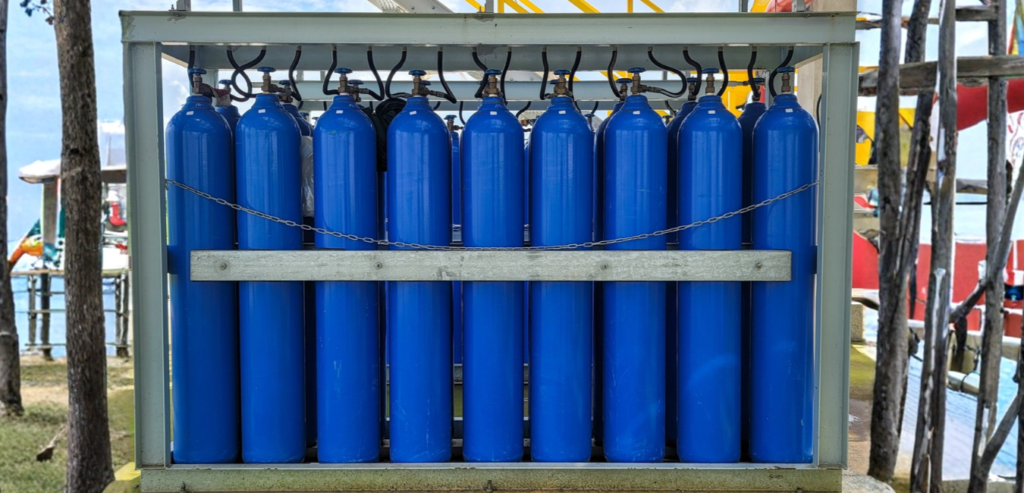
The gas pushing your beer from keg to faucet affects carbonation, foam, and taste. Straight CO2 works for simple short-draw setups, but if you run stouts, long draw lines, or multiple styles on one system, you need a blended gas. Choosing the right mix starts with understanding how nitrogen and CO2 work together in a draft system.
Why gas matters in a draft system
CO2 keeps beer carbonated. It is the standard gas for most kegged beer and the only gas many kegerator owners know. At the right pressure, it pushes beer through the line while maintaining the carbonation the brewer intended.
The problem shows up in two situations. Long draw lines (anything over about 15 feet from keg to faucet) need higher pressure to push the beer that distance. Higher CO2 pressure over-carbonates the beer, making it foamy and harsh. Nitrogenated beers like stouts use a different gas profile entirely.
Nitrogen solves both problems. It is far less soluble in beer than CO2, so it adds push without changing carbonation. Mixed with CO2 in the right ratio, it delivers the correct carbonation for the style while handling whatever line length the system needs.
Common beer gas blends and when to use them
The blend ratio is written as nitrogen/CO2. A 75/25 blend means 75 percent nitrogen and 25 percent CO2.
| Blend (N2/CO2) | Best for | Typical keg pressure |
|---|---|---|
| 75/25 | Stouts, nitro beers, long draw | 30 to 40 psi |
| 70/30 | Ales and lagers on long draw | 20 to 25 psi |
| 60/40 | Ales and lagers needing more carbonation | 20 to 25 psi |
| 100% CO2 | Short-draw kegerators, standard lagers | 12 to 15 psi |
Nitrogen beer gas for stout
Nitrogen beer gas for stout pours produces the tight, creamy head and smooth mouthfeel that defines a nitro beer. Stouts like Guinness, Kilkenny, and most nitro beers are designed for a 75/25 nitrogen-CO2 blend pushed through a stout faucet with a restrictor plate.
Always use nitrogen beer gas for stout or any nitrogenated beer on your system. Running a stout on straight CO2 over-carbonates it, kills the creamy texture, and produces a harsh, fizzy pour that does not match what the brewer intended.
Beer gas blend for lager
The right beer gas blend for lager depends on your line length and the carbonation level the brewer recommends. Most American-style lagers run at about 2.5 to 2.8 volumes of CO2.
For a short-draw kegerator (under 10 feet of line), straight CO2 at 12 to 15 psi works. For a long-draw system in a bar or restaurant, a 60/40 or 70/30 blend keeps the lager properly carbonated without the foaming problems that straight CO2 causes at higher pressures.
If you run multiple styles, a beer gas blend for lager and ale (60/40 or 70/30) on the long-draw side and straight CO2 on the short-draw kegerator gives you the most flexibility.
75/25 beer gas vs straight CO2
The 75/25 beer gas vs straight CO2 question comes up most often with operators running stouts alongside standard tap lines.
When 75/25 wins
- Stout and nitro beer lines (always 75/25 or similar high-nitrogen blend)
- Long-draw systems where over-carbonation is a problem at the pressures needed
- Bars and restaurants with 20 or more feet of line between cooler and tap
When straight CO2 is enough
- Short-draw home kegerators with standard lagers and ales
- Single-keg setups with short lines
- Beer styles meant to be highly carbonated (hefeweizen, Belgian ales)
Running 75/25 beer gas vs. straight CO2 on a regular lager will flatten it over time. The low CO2 content cannot hold carbonation in most standard beer styles, so kegs pour flat before they empty. Match the blend to the style.
Equipment for blended beer gas
Running blended gas requires a few things beyond a standard CO2 setup:
- Nitrogen-CO2 cylinders: pre-mixed cylinders come in standard blend ratios (75/25, 70/30, 60/40). Easiest for single-blend setups.
- Gas blenders: inline blenders mix nitrogen and CO2 from separate cylinders to your chosen ratio. Useful when you run multiple blends on one system. These connect to your gas apparatus and can be adjusted for different beer styles.
- Stout faucet: a specialized faucet with a restrictor plate that creates the cascading pour on nitro beers. Standard faucets do not produce the same result.
- Nitrogen regulator: nitrogen runs at higher pressures than CO2. You need a regulator rated for nitrogen service.
Your beer gas suppliers should be able to spec the equipment for your draft system and provide the correct cylinders or blenders for your line lengths.
Working with beer gas suppliers in the Hudson Valley
Local beer gas suppliers make the difference between a draft system that pours right and one that wastes kegs. CryoWeld has supplied nitrogen, CO2, and pre-mixed beer gas to bars, restaurants, breweries, and home kegerator owners in the Hudson Valley since 1993.
We stock 75/25, 70/30, and 60/40 pre-mixed cylinders at both locations and can arrange delivery service and bulk supply for higher-volume accounts. If you are not sure which blend fits your system, bring in your draft specs, and we will match the gas to your lines and your beer list.
We serve Dutchess, Ulster, Orange, Putnam, Columbia, and Greene counties. Call Poughkeepsie at (845) 473-3357 or Lake Katrine at (845) 336-8680, weekdays 8 to 5. Or visit cryoweld.com.
Frequently asked questions
What beer gas blend do I need for a stout on draft?
A 75/25 nitrogen-CO2 blend is the standard for stouts and nitro beers. This high-nitrogen mix produces the creamy, cascading pour those styles are known for. You also need a stout faucet with a restrictor plate to get the right pour. Running a stout on CO2 alone gives a harsh, over-carbonated result.
Is 75/25 or 60/40 better for my kegerator?
It depends on what you pour. A 75/25 blend is for stouts and nitro beers only. A 60/40 blend works for ales and lagers on long-draw systems. For a standard home kegerator with short lines pouring regular beer, straight CO2 is usually the right choice. Using 75/25 on a standard lager will flatten it.
Why does my draft beer pour foamy?
Excess foam usually points to a gas pressure or temperature problem. If pressure is too high, CO2 over-carbonates the beer. If the system runs warm, dissolved CO2 breaks out of solution. Switching to a nitrogen blend on long-draw lines often fixes persistent foam issues. Also check that your beer lines are clean.
How often should I replace my beer gas cylinder?
That depends on keg volume and pour rate. A standard pre-mixed cylinder lasts most single-tap kegerators several months. High-volume bars may need weekly or biweekly refills. Your beer gas suppliers can recommend a delivery schedule based on your usage and help you size the right cylinder.
Can I mix my own beer gas?
Not safely without a certified gas blender. Pre-mixed cylinders are the simplest option. Inline blenders are available for systems that need multiple ratios, but the blender, regulators, and gas sources must be properly installed and calibrated. Talk to your gas supplier before setting up a blender system.