
Welding Fumes from Galvanized and Coated Metal: What to Know Before You Strike an Arc
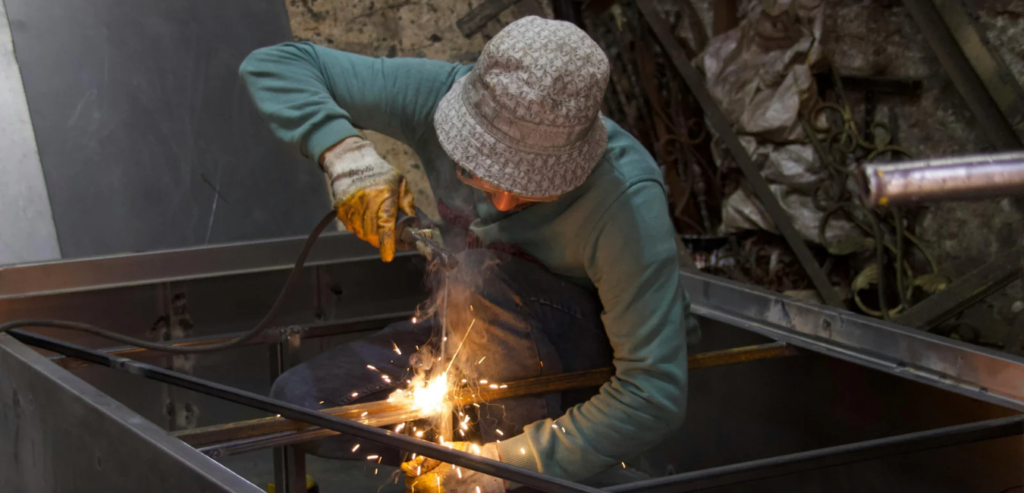
Welding galvanized steel produces zinc oxide fumes that are harmful to breathe. The zinc coating vaporizes under arc heat and forms fine particles that reach deep into the lungs. The same risk applies to other coated metals: cadmium-plated parts, chromate primers, and painted or powder-coated surfaces all release toxic fumes when heated. Knowing what you are welding, what the coating releases, and how to protect yourself keeps the work safe.
Why galvanized and coated metals are different
Bare mild steel produces iron oxide fumes when welded. Those fumes are a known irritant, but they are relatively low-risk compared to what coated metals produce.
Galvanized steel has a zinc coating applied to prevent rust. When the arc hits that coating, the zinc vaporizes and forms zinc oxide welding fumes. These fumes are the primary cause of metal fume fever, a condition that feels like a bad flu and hits within hours of exposure.
Other coatings that produce hazardous fumes
| Coating | Fume hazard | Health risk |
|---|---|---|
| Zinc (galvanized) | Zinc oxide | Metal fume fever |
| Cadmium plating | Cadmium oxide | Severe respiratory and kidney damage |
| Chromate primer | Hexavalent chromium | Carcinogenic |
| Lead-based paint | Lead oxide | Neurological and kidney damage |
| Polyurethane | Isocyanates, hydrogen cyanide | Severe respiratory irritation |
| Vinyl paint | Hydrogen chloride | Chemical burns to airways |
Cadmium is the most dangerous coating to weld over. Cadmium oxide fumes can cause loss of consciousness, severe lung damage, and long-term kidney disease. If you suspect cadmium plating on a part, do not weld it without confirmed ventilation and supplied-air respiratory protection.
Metal fume fever symptoms
Metal fume fever symptoms typically appear 2 to 10 hours after exposure to zinc oxide welding fumes. The condition is often called “Monday morning fever” because welders who build tolerance during the week lose it over the weekend and get hit again on Monday.
What to watch for
- Fever, chills, and sweating
- Headache and muscle aches
- Nausea and poor appetite
- Dry or irritated throat
- Metallic taste in the mouth
- Fatigue and shortness of breath
- Chest tightness and cough
Metal fume fever symptoms usually resolve within 24 to 48 hours with rest and fluids. The condition is not an allergy. It is a dose-dependent inflammatory response: the more zinc oxide welding fumes you inhale, the worse the reaction.
If symptoms are severe or worsen beyond flu-like complaints (vomiting, confusion, collapse), seek medical attention. These may indicate exposure to cadmium or another highly toxic coating rather than zinc alone.
Reducing exposure before you strike
The most effective way to reduce the welding fumes galvanized metal produces is to remove the coating before welding.
- Grind the zinc off at least 1 to 4 inches on each side of the weld joint using an angle grinder with a grinding disc. This is the single best step for cutting fume exposure.
- Chemical stripping works where grinding is not practical, but creates its own disposal requirements.
- Choose the right process. MIG and flux core on galvanized steel produce more fumes than TIG because of higher heat input. Lower amperage settings help when the machine and joint allow it.
- Position matters. Weld upwind or to the side of the fume plume, not directly over the joint.
If the coating cannot be removed (structural work, field repairs), maximize ventilation and respiratory protection.
Respiratory protection welding coated metal
Choosing respiratory protection for welding coated metal depends on the coating, the ventilation, and the duration of exposure.
Minimum protection levels
| Situation | Minimum respirator |
|---|---|
| Galvanized steel, well-ventilated | Half-face with P100 filters |
| Galvanized steel, enclosed space | Powered air-purifying respirator (PAPR) |
| Cadmium or chromate coatings | Supplied-air respirator |
| Unknown coating | Supplied-air respirator until identified |
A standard disposable N95 is not adequate for welding fumes galvanized metal produces. Welding fume particles are extremely fine, and zinc oxide specifically requires at least P100 filtration.
Ventilation comes first
Respiratory protection for welding coated metal should supplement ventilation, not replace it. Use local exhaust ventilation (LEV) positioned within 12 to 18 inches of the arc to capture fumes at the source. General shop ventilation helps but is not enough on its own for coated metals.
If your shop welds galvanized or coated material regularly, a fume extraction torch or a portable fume extraction arm is worth the investment. These pull fumes directly from the weld zone before they reach your breathing area.
After welding: restoring corrosion protection
Welding burns off the zinc coating in the heat-affected zone, leaving bare steel exposed to rust. After welding, restore protection with:
- Zinc-rich cold galvanizing spray or paint
- Epoxy or polyurethane topcoat over the weld area
- Full re-galvanizing (hot dip) for complete coverage
Stock the right touch-up products alongside your wire and consumables so this step does not get skipped.
Protecting your crew in the Hudson Valley
CryoWeld carries respiratory protection, welding helmets, gloves, and fume extraction equipment at both our Poughkeepsie and Lake Katrine locations. If your shop welds galvanized or coated metal regularly, we can help you set up the right combination of ventilation and PPE for the work.
We serve welders, fabricators, and contractors across Dutchess, Ulster, Orange, Putnam, Columbia, and Greene counties. Call Poughkeepsie at (845) 473-3357 or Lake Katrine at (845) 336-8680, weekdays 8 to 5. Or visit cryoweld.com.
Frequently asked questions
What are the symptoms of metal fume fever?
Metal fume fever symptoms include fever, chills, headache, muscle aches, nausea, metallic taste, dry throat, and fatigue. They usually start 2 to 10 hours after breathing zinc oxide fumes and resolve within 24 to 48 hours. If symptoms include confusion, vomiting, or chest pain, seek medical care because the exposure may involve a more toxic coating.
What respiratory protection do welders need for galvanized or coated metals?
At minimum, a half-face respirator with P100 filters when welding galvanized steel in a well-ventilated space. Enclosed spaces need a powered air-purifying respirator (PAPR). Cadmium or chromate coatings require supplied-air protection. Always use local exhaust ventilation alongside the respirator.
Can I weld galvanized steel safely?
Yes, if you take precautions. Grind the zinc coating off the weld area, use local exhaust ventilation, and wear a respirator with P100 filters at minimum. Watch for fume fever signs after welding and stop work if they appear. Removing the coating before welding cuts fume exposure by the largest margin.
Does drinking milk prevent metal fume fever?
No. This is a common shop myth. The UK Health and Safety Executive has stated that milk does not prevent metal fume fever. The only reliable prevention is reducing exposure through coating removal, ventilation, and proper respiratory protection.
What should I do if I think I have metal fume fever?
Stop welding immediately and move to fresh air. Rest, drink fluids, and monitor your symptoms. Most cases resolve within 24 to 48 hours. If you experience severe symptoms like confusion, vomiting, chest pain, or difficulty breathing, seek medical attention. Those may indicate exposure to cadmium or another highly toxic fume rather than zinc.