
Choosing Cutting and Grinding Discs for Welding and Fabrication Work
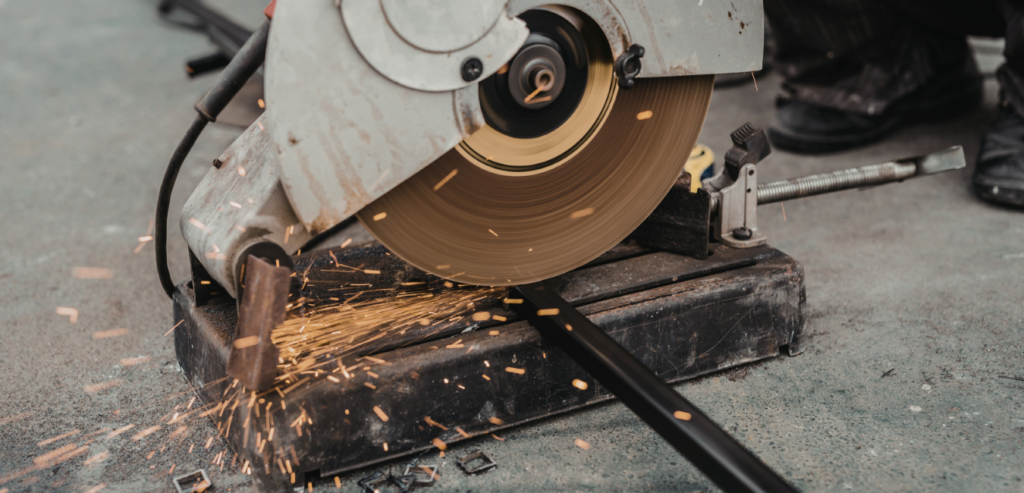
The right disc for a welding or fabrication job depends on three things: the operation (cutting or grinding), the metal, and the tool. Running the wrong disc wastes material, slows the work, and creates a safety risk. Getting the match right means cleaner cuts, smoother finishes, and longer disc life.
Cutting discs vs grinding discs
Cutting discs and grinding discs look similar on the shelf, but they are built for different jobs.
A cutting disc is thin, usually 1/16 inch or less. It slices through metal with a narrow kerf and works for pipe, angle iron, flat bar, and sheet. Thinner discs cut faster and cleaner, but they are fragile and should never take side pressure.
A grinding disc is thicker, typically 1/4 inch. It removes material from the surface rather than cutting through it. Use it for smoothing welds, removing slag, beveling edges, and blending joint surfaces on your machine work.
Never swap one for the other. Cutting discs are not rated for side load and can shatter. Grinding discs are too thick to cut cleanly.
Type 1 vs type 27 cutting wheel
The Type 1 vs. Type 27 cutting wheel difference is the shape of the disc and the angle it contacts the workpiece.
A Type 1 wheel is flat with even thickness across its face. It mounts flush and cuts straight into the material. Type 1 works well on chop saws, bench grinders, and straight-on cutting where clearance is not a problem.
A Type 27 wheel has a depressed center that offsets the mounting hub from the cutting surface. This lets you cut or grind closer to a flat surface without the flange hitting the workpiece. Type 27 is the most common wheel for angle grinders in welding and fab shops because it handles contoured surfaces and weld removal.
| Feature | Type 1 | Type 27 |
|---|---|---|
| Shape | Flat | Depressed center |
| Best tool | Chop saw, bench grinder | Angle grinder |
| Use angle | Straight on | Slight angle |
| Best for | Cut-off, straight cuts | Grinding welds, contoured work |
If you are cutting with an angle grinder in the field or shop, Type 27 is typically the better choice. For a chop saw or dedicated cut-off tool, Type 1 is standard.
Grinding disc for mild steel vs stainless
Picking a grinding disc for mild steel vs stainless matters more than most people realize. Using the wrong disc on stainless creates contamination that leads to corrosion at the weld.
Mild steel
Aluminum oxide discs handle most mild steel grinding. They are inexpensive and work for general weld cleanup and surface prep. For heavier stock removal, zirconia alumina discs cut faster and last longer because the grain is self-sharpening.
Stainless steel
Stainless requires a disc rated “contamination-free” or “iron-free.” Standard aluminum oxide discs contain iron-bearing fillers that embed in the stainless surface and cause rust spots. Use discs labeled for stainless or choose ceramic grain discs, which run cooler and leave no ferrous residue.
This matters for food processing equipment, pharmaceutical fixtures, architectural handrails, and anything exposed to moisture. A grinding disc for mild steel vs. stainless is not interchangeable if corrosion resistance matters.
Abrasive grain comparison
| Grain | Best for | Cost |
|---|---|---|
| Aluminum oxide | Mild steel, general purpose | Low |
| Zirconia alumina | Heavy grinding, carbon and stainless steel | Medium |
| Ceramic | High-performance stainless and alloy work | High |
Chop saw blade selection
Chop saw blade selection depends on whether your saw runs abrasive wheels or carbide-tipped (TCT) blades. Both cut metal, but they work differently and leave different results.
Abrasive chop saw wheels
Abrasive wheels are the standard for most metal-cutting chop saws. They grind through the material by friction, producing sparks and a heat-affected zone that may need grinding before welding. Wheels wear down as you cut, so diameter shrinks over time.
Match the wheel to your saw’s RPM. The maximum speed rating printed on the wheel must meet or exceed the saw’s speed. A wheel rated below the RPM can burst under centrifugal force.
Carbide-tipped blades
TCT blades chip metal away with teeth rather than grinding through it. The cut stays cooler, produces less burr, and parts are often ready for welding without cleanup. They cost more up front but last longer.
For chop saw blade selection in a fab shop, the choice comes down to volume. High-production cutting favors TCT blades because you skip the cleanup. Occasional cuts are fine on abrasive wheels at a lower per-blade cost.
What to check before you buy
Before stocking up, confirm the tool type (angle grinder, chop saw, bench grinder), disc type (Type 1 or Type 27), diameter, material rating, and speed rating. The disc’s max RPM must meet or exceed the tool’s RPM.
Wear your safety gear every time you grind or cut: face shield, gloves, hearing protection, and long sleeves at minimum. Any cutting and grinding discs for welding work should meet ANSI B7.1 standards for bonded abrasives.
Getting the right discs in the Hudson Valley
CryoWeld stocks cutting wheels, grinding discs, flap discs, and chop saw blades at both our Poughkeepsie and Lake Katrine locations. We carry abrasive products for mild steel, stainless, and aluminum in the sizes most shops run. Bring in your grinder specs, and we will match you up.
We serve welders, fabricators, and contractors across Dutchess, Ulster, Orange, Putnam, Columbia, and Greene counties. Call Poughkeepsie at (845) 473-3357 or Lake Katrine at (845) 336-8680, weekdays 8 to 5. Or visit cryoweld.com.
Frequently asked questions
What cutting disc do I need for a chop saw?
Use a 14-inch Type 1 abrasive cut-off wheel rated at or above your saw’s RPM. Check the material rating: aluminum oxide for mild steel, zirconia or ceramic for stainless. If your saw accepts TCT blades, carbide-tipped blades give cleaner cuts with less burr.
What is the difference between a type 1 and type 27 grinding wheel?
A Type 1 wheel is flat and mounts flush, cutting straight into the workpiece. It is the standard for chop saws and bench grinders. A Type 27 has a depressed center that lets you work at an angle and get closer to flat surfaces. Type 27 is the go-to for angle grinder work in fabrication.
Can I use the same grinding disc on mild steel and stainless?
No. Standard mild steel discs contain ferrous fillers that contaminate stainless and cause rust. Always use discs labeled “contamination-free” or “for stainless” when grinding stainless steel. Cross-contamination is one of the most common causes of corrosion at stainless welds.
How do I know when to replace a disc?
Replace a cutting disc when it has worn to within an inch of the mounting flange or shows cracks, chips, or uneven wear. Replace a grinding disc when it vibrates excessively or glazes over. Never use a disc that has been dropped.
What size disc do I need for my angle grinder?
Match the disc diameter to your grinder. Common sizes are 4.5 inch, 5 inch, 7 inch, and 9 inch. Check the arbor size (most use 7/8 inch) and maximum disc diameter. Never mount a disc larger than the tool’s rating.