
Gas Cylinder Exchange vs. Refill: Which Saves You More?
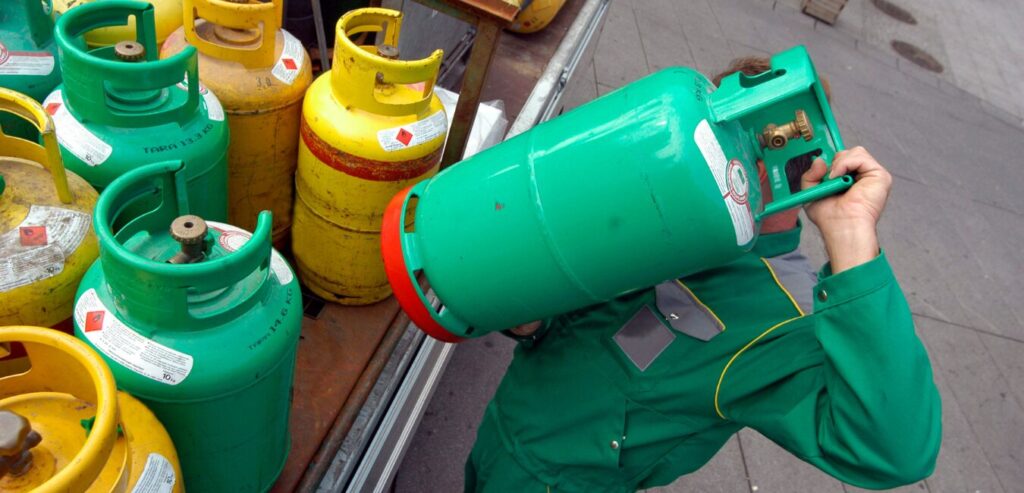
If you use welding gas, CO2, nitrogen, helium, or any other compressed gas on a regular basis, you have two options for keeping your supply going: exchange your empty cylinder for a full one, or get your own cylinder refilled. The gas cylinder exchange vs refill decision affects your cost per fill, your equipment quality, and how much flexibility you have with your gas supplier.
This post breaks down both options, explains the tradeoffs, and covers which one saves more depending on how you use gas.
How Cylinder Exchange Works
In a cylinder exchange program, you bring an empty cylinder to your gas supplier and swap it for a full one. You do not get your same cylinder back. You receive a different unit of the same size and gas type from rotating inventory.
Most industrial gas suppliers run a cylinder exchange program for standard gases: argon, CO2, oxygen, acetylene, nitrogen, and mixes. The exchange is fast, typically under ten minutes. The cylinders are owned and maintained by the supplier, who handles testing and recertification. You pay for gas plus a rental or exchange fee per swap.
How Cylinder Refill Works
With a refill, you own the cylinder and bring it in to be filled. The supplier fills your specific unit, and you take it home. You keep the same steel gas cylinder every time.
Owning high-pressure gas cylinders means you are responsible for maintenance, including hydrostatic testing on schedule. CryoWeld performs cylinder testing at our Poughkeepsie facility for customer-owned units. Refilling typically costs less per fill than exchange because there is no rental fee, but you carry the upfront purchase cost.
Gas Cylinder Exchange vs Refill: Side-by-Side
| Factor | Exchange | Refill (Own Cylinder) |
|---|---|---|
| Cylinder ownership | Supplier owns it | You own it |
| Upfront cost | Low (no cylinder purchase) | Higher (buy the cylinder) |
| Per-fill cost | Higher (includes rental/exchange fee) | Lower (gas only) |
| Maintenance responsibility | Supplier handles testing and upkeep | You handle testing and upkeep |
| Speed | Fast, swap and go | May need to wait for fill |
| Cylinder condition | Variable; you get what is next in line | You keep your own cylinder |
| Flexibility | Tied to one supplier’s exchange inventory | Can shop around for refills |
| Best for | Occasional or low-volume users | Regular, high-volume users |
When Exchange Saves You More
A cylinder exchange program makes more financial sense in these situations:
- You use gas occasionally (a few cylinders per month or less) and do not want to invest in buying high-pressure gas cylinders
- You prefer zero maintenance responsibility. The supplier handles all testing and certification on their cylinders
- You need multiple gas types and do not want to own a fleet of steel gas cylinder inventory
- You are starting a new shop or business and want to keep startup costs low
- Your cylinder is past its retest date or damaged, and exchanging is cheaper than recertifying it
For restaurants, bars, and event venues using CO2 or beer gas, exchange is almost always the simpler path. The volume is low enough that the per-fill premium is not significant, and the convenience of a quick swap outweighs the savings of ownership.
When Refilling Your Own Cylinder Saves More
Owning and refilling your own high-pressure gas cylinders saves money when:
- You go through multiple cylinders per week, and the per-fill savings add up over dozens of fills per year
- You run a welding shop or fabrication business where gas is a daily operating expense
- You want to control the condition of your equipment. Exchanging steel gas cylinder units means you might get a beat-up cylinder with worn valve threads in return for the clean one you just handed over
- You plan to stay with the same gas supplier long-term, and the upfront cylinder cost amortizes quickly
The math is straightforward. If the exchange fee adds $15 to $25 per swap on top of the gas cost, and you swap 50 cylinders a year, that is $750 to $1,250 annually in exchange fees alone. A new welded steel cylinder costs $150 to $400 depending on size. After a year or two of refills, the cylinder has paid for itself.
What About Welded Steel Cylinders vs. One-piece drawn
Most high-pressure gas cylinders used in welding and industrial service are one-piece drawn steel (DOT 3AA specification). Welded steel cylinders (DOT 4B, 4BA, 4BW) are used for lower-pressure applications like propane, some refrigerants, and certain specialty gases.
The gas cylinder exchange vs refill decision applies to both types, but welded steel cylinders are more common in exchange programs for propane and lower-pressure CO2 service. For high-pressure welding gases (argon, oxygen, nitrogen at 2,000+ psi), you will almost always be working with one-piece cylinders whether you exchange or own.
If you are not sure what type of steel gas cylinder you have, the DOT specification is stamped on the shoulder. CryoWeld’s team can help you identify it and confirm whether it is current on its retest schedule.
CryoWeld’s Cylinder Exchange Program
CryoWeld runs a cylinder exchange program for argon, CO2, oxygen, acetylene, nitrogen, helium, beer gas, and mixed welding gases at both Hudson Valley locations. We also refill customer-owned cylinders and offer bulk gas delivery for higher volumes.
Call Poughkeepsie at (845) 473-3357 or Lake Katrine at (845) 336-8680, weekdays 8 to 5. Or visit cryoweld.com.
Frequently Asked Questions
Do I need to own the cylinder to get gas delivery?
No. CryoWeld offers both exchange cylinders (supplier-owned) and refills of customer-owned cylinders. For bulk gas delivery, the cylinders are typically part of the delivery service. You do not need to purchase cylinders to get gas delivered.
Is refilling my own cylinder cheaper long-term?
Yes, for most regular users. Refilling eliminates the exchange or rental fee that is built into every swap. If you go through more than a few cylinders per month, the savings from owning and refilling your own high-pressure gas cylinders add up within the first year or two.
How often do gas cylinders need to be retested?
Most one-piece drawn steel gas cylinder units (DOT 3AA) require hydrostatic testing every 5 years, or every 10 years if marked with a star. Welded steel cylinders follow their own schedule based on specification. CryoWeld handles cylinder retesting at our Poughkeepsie location.
Can I exchange a cylinder from a different supplier?
This depends on the supplier. Some cylinder exchange program providers only accept their own branded cylinders. CryoWeld accepts standard DOT-specification cylinders regardless of where they were originally purchased, as long as they are within their test dates.
What happens if I exchange a new cylinder and get an old one back?
This is one of the trade-offs of any cylinder exchange program. You hand in your clean, well-maintained cylinder and receive whatever is next in the supplier’s rotation. It might be older, have cosmetic wear, or have different valve hardware. Owning and refilling avoids this issue entirely.
What is the difference between leasing and exchanging cylinders?
Leasing means you pay a monthly rental fee for each cylinder in your possession, whether you use it or not. Exchange means you pay per swap with no ongoing rental. Some suppliers combine both into a single program. Ask your supplier to clarify which model they use so you can compare the true cost per fill.