
Gas Regulators and Flowmeters 101: How to Choose the Right Apparatus for Your Torch
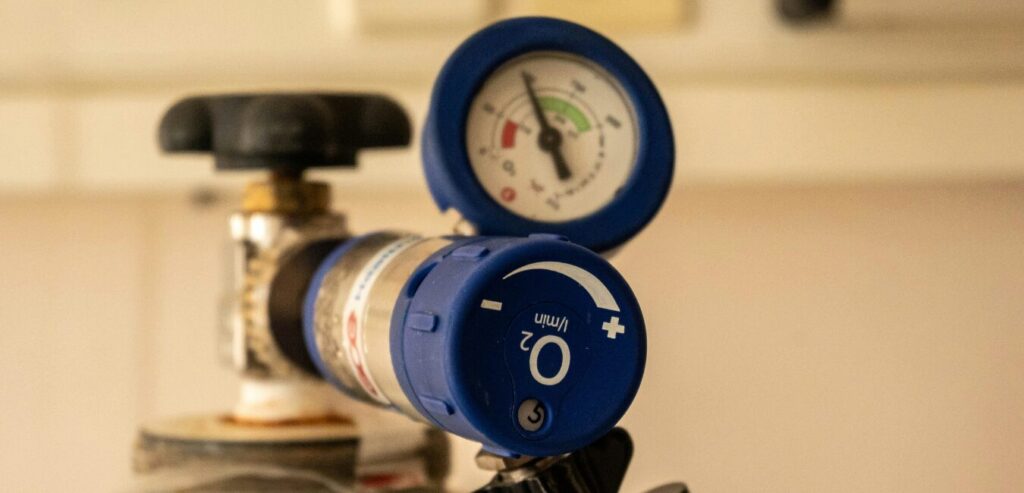
A gas regulator does one job: it takes high-pressure gas from a cylinder and delivers it at a controlled, lower pressure to your torch or welding machine. Get the wrong regulator, and you either starve the torch of gas or blow past the safe operating pressure of your equipment. Knowing how to choose a gas regulator saves you from wasted gas, bad welds, and safety problems.
This post covers the types of regulators and flowmeters, when to use each one, and the CGA connections that keep you from putting the wrong gas on the wrong equipment.
How Regulators Work
A gas regulator uses an internal diaphragm and spring to reduce cylinder pressure (which can exceed 2,000 psi) down to a usable working pressure (typically 5 to 100 psi depending on the application). You set the output with an adjusting screw, and the regulator holds that pressure steady as the cylinder empties.
Most regulators have two gauges. The high-pressure gauge shows how much gas is left in the cylinder. The low-pressure gauge shows the delivery pressure going to your torch or machine.
Single Stage vs Two Stage Regulator
The single vs two stage decision is the first fork in the road when choosing a regulator.
| Feature | Single Stage | Two Stage |
|---|---|---|
| Pressure drops | One reduction step | Two reduction steps |
| Output stability | Delivery pressure rises slightly as cylinder empties | Delivery pressure stays constant throughout |
| Readjustment needed | Yes, periodic adjustment as tank pressure drops | No, maintains set pressure automatically |
| Cost | Lower | Higher |
| Best for | Short jobs, oxy-fuel cutting, general shop use | Long welds, automated equipment, precision TIG, critical applications |
A single-stage regulator works fine for most manual welding and cutting. The delivery pressure creep is small and easy to compensate for by adjusting the screw periodically. The single-stage vs. two-stage regulator choice only matters when consistent, hands-off pressure is critical, such as automated welding, long uninterrupted runs, or calibration-sensitive work.
For an oxygen acetylene regulator guide covering oxy-fuel rigs: single-stage regulators are the industry standard for manual cutting and welding because the operator is right there and can adjust on the fly. Two-stage is preferred when the oxy-fuel rig feeds a machine or when cuts need to hold a tight tolerance over a long run.
Flowmeter Regulator for Welding
MIG and TIG welding do not need a traditional pressure-style regulator for their shielding gas. They need a flowmeter regulator for welding that delivers gas measured in cubic feet per hour (CFH) rather than psi.
A flowmeter regulator has a vertical tube with a ball that rises with gas flow. You read the flow rate by where the ball sits on the scale. Most MIG and TIG work runs at 15 to 25 CFH for argon or argon/CO2 mixes.
Why CFH instead of psi? Because shielding gas coverage depends on volume flow, not pressure. A flowmeter regulator for welding gives you a direct reading of how much gas reaches the weld pool.
| Regulator Type | Measures | Used For |
|---|---|---|
| Pressure regulator (single or two stage) | PSI output | Oxy-fuel torches, specialty gas delivery |
| Flowmeter regulator | CFH output | MIG shielding gas, TIG shielding gas |
| Combination (pressure + flow) | Both PSI and CFH | Setups needing both pressure and flow control |
CryoWeld stocks flowmeter regulators and pressure regulators from Victor and Harris for every process and gas type.
CGA Connections: Why You Cannot Mix and Match
Every gas type uses a specific CGA (Compressed Gas Association) connection number on the cylinder valve and regulator inlet. These connections are intentionally different to prevent cross-connection of incompatible gases. Here is an oxygen-acetylene regulator guide to the most common CGA numbers you will encounter. This oxygen acetylene regulator guide also covers MIG and TIG connections:
| Gas | CGA Number | Thread Type |
|---|---|---|
| Oxygen | CGA 540 | Right-hand (standard) |
| Acetylene | CGA 510 | Left-hand (notched nut) |
| Argon | CGA 580 | Right-hand |
| CO2 | CGA 320 | Right-hand |
| Nitrogen | CGA 580 | Right-hand |
| Helium | CGA 580 | Right-hand |
| Propane/fuel gas | CGA 510 | Left-hand (notched nut) |
Fuel gases (acetylene, propane) use left-hand threads with a notch on the nut. This is a deliberate safety feature. You physically cannot thread an oxygen regulator onto an acetylene cylinder, which prevents potentially explosive misconnections.
Knowing the CGA number for every gas you run is part of choosing the right regulator. If you are setting up a new cylinder, check the connection before you buy. CryoWeld’s gas apparatus team can match the right regulator to any cylinder in our inventory.
Choosing the Right Regulator for Your Setup
Here is a practical checklist:
- Identify your gas type and verify the CGA connection number
- Determine whether you need pressure delivery (oxy-fuel) or flow delivery (MIG/TIG shielding gas)
- For oxy-fuel rigs, a single-stage vs. two-stage regulator decision depends on whether you adjust manually or need hands-off consistency
- For MIG and TIG, buy a flowmeter regulator for welding calibrated to CFH
- Match the regulator’s maximum inlet pressure to your cylinder’s service pressure
- Check that hoses and fittings are compatible with both the regulator outlet and the torch inlet
For a basic oxy-fuel setup, you need two regulators: one oxygen acetylene regulator. The standard is a single-stage oxygen regulator (CGA 540) and a single-stage acetylene regulator (CGA 510). For MIG or TIG, you need one flowmeter regulator matched to your shielding gas.
Getting Regulators at CryoWeld
CryoWeld carries Victor, Harris, and other regulator brands for oxy-fuel, MIG, TIG, and specialty gas applications. We also stock gas cylinders, hoses, and torches to complete your setup. If your regulator needs repair or rebuild, our shop handles that too.
Stop by Poughkeepsie or Lake Katrine in the Hudson Valley. Call Poughkeepsie at (845) 473-3357 or Lake Katrine at (845) 336-8680, weekdays 8 to 5. Or visit cryoweld.com.
Frequently Asked Questions
Can I use the same regulator for oxygen and acetylene?
No. Oxygen uses CGA 540 (right-hand thread), and acetylene uses CGA 510 (left-hand thread with notched nut). The connections are physically different to prevent cross-connection. Using an oxygen regulator on a fuel gas cylinder could cause an explosion. Always use gas-specific regulators.
Do I need a flowmeter instead of a regulator for MIG welding?
Yes. MIG shielding gas needs to be measured in CFH (cubic feet per hour), not psi. A flowmeter regulator for welding gives you a direct reading of gas volume reaching the weld, which is what determines shielding quality. Standard pressure regulators do not provide this.
How do I know when a gas regulator needs to be replaced?
Replace a regulator if the gauges do not return to zero when disconnected, if the delivery pressure creeps up on its own without adjustment, if there are visible cracks in the diaphragm housing, or if gas leaks from the body or fittings that tightening does not fix. A regulator that creeps or leaks is a safety hazard.
What is the difference between a Victor and Harris regulator?
Both are reputable brands that make regulators for the same applications. Victor and Harris regulators differ in body design, adjustment feel, and gauge layout, but functionally they serve the same purpose. The choice often comes down to shop preference and which brand’s parts and accessories your supplier stocks.