
MIG Welding Gun: Know the Basics
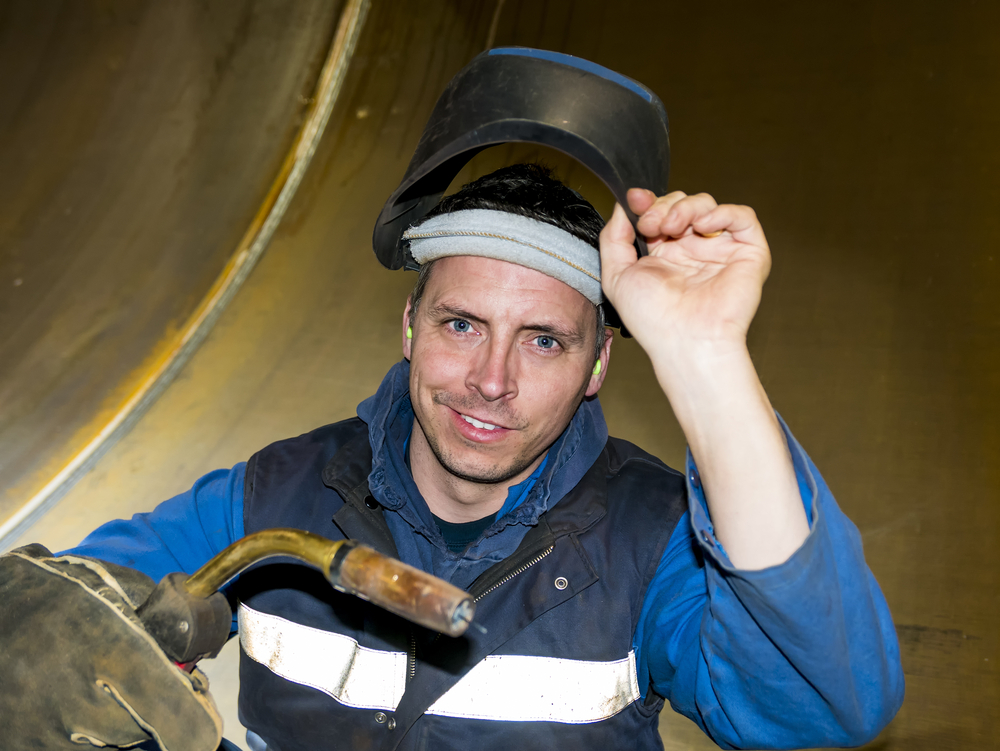
A MIG welding gun is a wire-fed torch that supplies shielding gas and filler wire to the weld joint at the same time. You pull the trigger, the wire feeds, the gas flows, and you weld. That simplicity is why MIG is the most common process in production shops, and why MIG guns are the piece of welding equipment most people buy first.
How MIG guns differ from each other
MIG guns are not all the same, and assuming they are is how people end up with a gun that overheats on the third pass or can’t feed the wire diameter they need.
The two specs that matter most are amperage rating and duty cycle. The amperage rating tells you how much heat the gun can handle. Duty cycle is the percentage of a ten-minute window that the gun can run at its rated amperage before it needs to cool down. A gun rated at 200 amps with a 60% duty cycle can weld for six minutes out of every ten at 200 amps. Push past that, and you start melting the handle, the trigger, or the cable insulation.
Different guns also accept different wire diameter ranges. A gun rated for .030 to .035 wire won’t run .045 wire properly because the liner bore and contact tip are too small. If you change wire sizes regularly, you are going to be swapping tips and liners each time.
Ratings and what they tell you
| Spec | What it controls | Typical range |
|---|---|---|
| Amperage rating | Maximum weld heat the gun handles | 100 to 600 amps |
| Duty cycle | How long you can weld before cooling | 30% to 100% at rated amps |
| Wire diameter | Which wire sizes the gun accepts | .023 to .045 inch |
| Voltage | Input power from the welding machine | 80V to 250V DC |
The duty cycle number is the one most people overlook. A 150-amp gun with a 100% duty cycle will outperform a 200-amp gun with a 30% duty cycle if you are running long beads on a production job, because you can actually keep welding instead of waiting for the gun to cool down between passes.
Consumables wear out before the gun does
Most MIG gun problems are consumable problems. The contact tip wears from the wire passing through it thousands of times; the bore widens, and eventually the arc wanders or the wire feeds erratically. A lot of welders troubleshoot their machine settings when the real fix is a $2 contact tip swap.
The liner inside the cable assembly also wears over time, especially if your wire is dirty or your feed tension is too high. A kinked or clogged liner causes birdnesting at the drive rolls and inconsistent feeding that no amount of voltage adjustment will fix. Replace the liner, and the gun runs like new.
The nozzle collects spatter and eventually restricts gas flow. Some guys run an anti-spatter dip or gel; some just knock the buildup off with pliers between passes. Either way, if your gas coverage looks uneven, check the nozzle before you blame the gas regulator.
We stock replacement tips, nozzles, liners, and complete consumable kits for Miller and Tweco MIG guns at both CryoWeld locations. If you are not sure which tip or liner your gun takes, bring it in, and we will match it.
TIG torch types: what the numbers mean
TIG torches are sized by amperage rating, and the two most common on the shop floor are the 17 and the 26. A 17-series torch handles up to roughly 150 amps air-cooled and suits thinner material and lower-amperage jobs. A 26-series torch is water-cooled and rated for higher sustained amperage, making it the better choice for thicker stock or longer production runs where heat buildup becomes a problem.
The “rule of 33” is a quick field check some welders use to estimate safe amperage for an air-cooled torch: multiply the torch’s cup size in sixteenths of an inch by roughly 33 to get a rough amperage ceiling. It is a rule of thumb, not a substitute for the torch manufacturer’s rated spec.
CryoWeld carries both 17- and 26-series TIG torches along with MIG guns and consumables in our MIG/TIG torches and accessories line, and full welding machines in our welding machines category.
Picking the right gun for your shop
If most of your work is mild steel fabrication under 3/16 inch, a 200-amp MIG gun with a 60% duty cycle covers the majority of jobs without overheating. For heavier structural work or production runs, step up to a 300-amp gun or higher. The price difference is usually less than the cost of replacing a gun you burned out by running it past its rated capacity.
Brand compatibility matters. MIG gun connectors are not universal. A Miller gun connects differently than a Lincoln or an ESAB, and cross-brand adapters exist but add another potential failure point in your cable assembly. Buy the gun that matches your machine, or ask us which aftermarket options actually fit without adapters.
If you run both MIG and TIG in the same shop, a multi-process machine with a MIG gun and a separate TIG torch setup saves floor space. But dedicated single-process machines are generally better at their one job, so high-volume shops usually keep separate setups.
Stop guessing, start matching
The most common mistake we see at the counter is someone running the wrong gun for their machine or their wire, and then wondering why their welds look rough. It is seldom the welder’s technique. It is usually a consumable that costs less than lunch.
If you need a MIG gun, TIG torch, or just a bag of contact tips, call our Poughkeepsie shop at (845) 473-3357 or Lake Katrine at (845) 336-8680. We are open weekdays 8 to 5, and you can see what we carry at cryoweld.com.
FAQs
What’s the difference between a 17 and a 26 TIG torch?
A 17-series torch is air-cooled and handles lighter-duty work up to about 150 amps, while a 26-series torch is water-cooled and built for higher amperage and longer runs without overheating. Shop volume and material thickness decide which one makes sense.
Can I use the same MIG gun for different wire sizes?
Most MIG guns handle a narrow range of wire diameters based on their contact tip and liner, so switching wire sizes usually means swapping the tip and sometimes the liner rather than the whole gun.
Do I need a different torch for aluminum TIG welding?
Aluminum TIG work typically calls for a torch rated for AC output and often a larger cup for better gas coverage, since aluminum needs more shielding gas flow than steel to prevent contamination.
How do I know when my MIG gun’s consumables need replacing?
Inconsistent arc, excessive spatter, or wire feeding problems usually point to a worn contact tip or liner before the gun itself is actually failing. Swapping the tip is the first and cheapest thing to check.