
OSHA Gas Cylinder Storage Requirements: What Your Shop Needs to Know
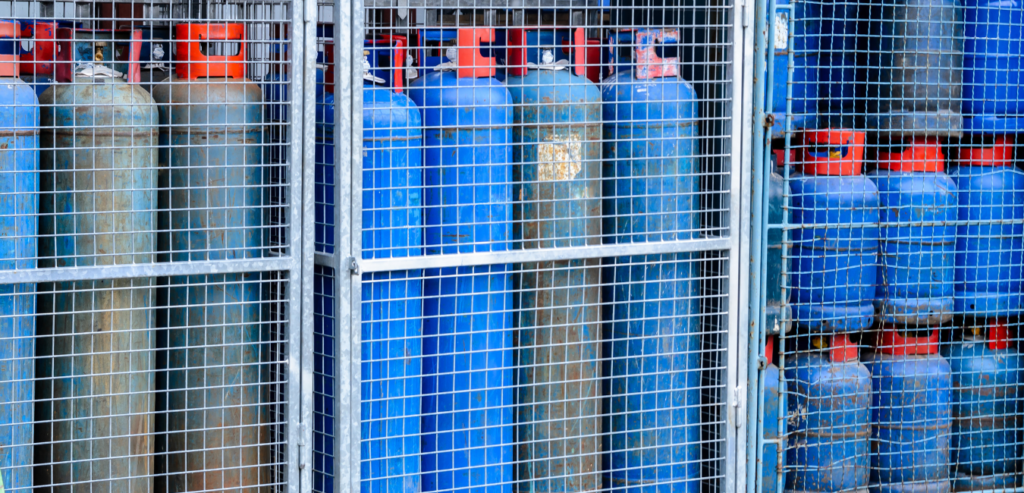
OSHA gas cylinder storage requirements set the baseline for how welding shops, job sites, and fabrication facilities handle compressed gas. The rules cover everything from how cylinders are secured to how far apart oxygen and fuel gas must sit. Most of it is common sense once you read through it, but getting a detail wrong during an inspection can shut a job down.
What OSHA Covers for Cylinder Storage
The compressed gas cylinder storage rules that apply to most welding operations fall under 29 CFR 1926.350 for construction and 29 CFR 1910.253 for general industry. Both standards address how cylinders are transported, placed, and stored on site.
The main points:
- Cylinders must be stored upright and secured so they cannot tip or be knocked over. Use a chain, strap, or purpose-built rack.
- Valve protection caps must be in place whenever a cylinder is not connected to a regulator.
- Store cylinders in a dry, well-ventilated area away from elevators, stairs, and gangways.
- Do not store cylinders in unventilated enclosures like lockers or sealed closets.
- Keep cylinders clear of heat sources, open flame, and electrical circuits.
- Close the valve when a cylinder is empty, when work is finished, or when the cylinder is being moved.
These compressed gas cylinder storage rules apply whether the cylinder is full or empty. An empty cylinder still holds residual pressure and gets the same treatment as a full one.
How Far Apart Should Oxygen and Acetylene Cylinders Be Stored
The separation rule is one of the most frequently cited standards on welding job sites. OSHA 1926.350(a)(10) says that oxygen cylinders in storage must be separated from fuel gas cylinders or combustible materials by at least 20 feet, or by a noncombustible barrier at least 5 feet high with a fire-resistance rating of at least one-half hour.
That 20-foot rule applies to oxygen and acetylene, oxygen and propane, or oxygen and any other fuel gas. The logic is straightforward. Oxygen feeds fire. Fuel gas burns. Storing them next to each other without separation means one incident could set off both.
| Requirement | Standard |
|---|---|
| Minimum separation distance | 20 feet (6.1 m) |
| Alternative barrier height | 5 feet (1.5 m) minimum |
| Barrier fire rating | 1/2 hour minimum |
| Applies to | Oxygen and any fuel gas or combustible |
The same section requires that cylinders stored indoors be kept at least 20 feet from highly combustible materials such as oil, grease, or excelsior. That matters for shops that keep rags, solvents, or cleaning supplies near their gas racks.
If your shop runs oxy-fuel setups for cutting, keep the oxygen rack on one side of the storage area and the acetylene or propane on the other. A concrete block wall or steel partition with the right fire rating works as the barrier when you cannot get the full 20 feet.
Securing and Moving Cylinders Safely
Most cylinder incidents happen during handling, not during welding. OSHA spells out how to move and place cylinders on site.
When you move a cylinder, tilt it onto its bottom edge and roll it. Do not drag it, drop it, or let it strike another cylinder. When hoisting cylinders, use a cradle, slingboard, or pallet. Magnets and choker slings are not allowed.
On powered vehicles, cylinders ride upright and secured. On the shop floor, every cylinder in use needs to be strapped or chained to a wall, bench, or cylinder cart. A cylinder that tips and snaps a valve can become a projectile.
Keep safety equipment within reach. Gloves and eye protection should be on hand whenever you are cracking valves, changing regulators, or moving cylinders in tight quarters.
Valve protection caps stay on until the cylinder is connected and ready to use. Do not use the cap as a lifting point, and do not pry a frozen cylinder loose with a bar jammed under the cap or valve. Warm water works for freeing a stuck cylinder. Boiling water does not.
Common Storage Mistakes That Get Shops Cited
Some of the most common compressed gas cylinder storage rule violations are simple to prevent once you know what inspectors look for.
Mixing full and empty cylinders in the same rack without labels. An unlabeled cylinder is a guessing game for your crew. Mark empties clearly and keep them separate from full stock.
Blocking exits and pathways with cylinder rows. Cylinders leaned against walls near doorways or parked in aisles create trip hazards and slow emergency response.
Storing cylinders on bare dirt or wet concrete. Moisture speeds up corrosion on the cylinder base and can freeze a cylinder to the ground in cold weather. Use dry, level surfaces.
Skipping valve caps on empties. The valve is the most vulnerable part of the cylinder. A cap takes two seconds to thread on and prevents damage during any handling.
Using cylinders as rollers, supports, or makeshift workstands. OSHA 1926.350(c)(1) specifically bans this, full or empty.
Regular cylinder inspections and maintenance catch problems before they turn into citations. Check hydrostatic test dates, look for dents and heavy corrosion, and pull any damaged cylinder from service immediately.
Keeping Your Cylinder Storage Right in the Hudson Valley
CryoWeld stocks oxygen, acetylene, argon, CO2, nitrogen, and propane cylinders at both locations with exchange and refill options from small portables to full-size tanks. If you need help organizing a storage area that meets code, our counter staff can walk you through cylinder sizing, rack spacing, and separation requirements.
We serve welders, fabricators, and contractors across Dutchess, Ulster, Orange, Putnam, Columbia, and Greene counties. Call our Poughkeepsie team at (845) 473-3357 or Lake Katrine at (845) 336-8680, weekdays 8 to 5. Or visit cryoweld.com.
Frequently Asked Questions
Can I store gas cylinders outside?
Yes. Outdoor storage is common and often easier to ventilate than indoor setups. Keep cylinders off bare ground, protect them from direct sun and weather, and maintain the 20-foot separation between oxygen and fuel gas. Anchor or chain them so they cannot tip from wind or vehicle traffic.
Do empty cylinders follow the same storage rules?
Yes. OSHA treats empty cylinders the same as full ones. They still contain residual gas and pressure. Store them upright, capped, secured, and separated by gas type. Mark them “empty” so your crew does not waste time checking or swapping regulators on a dead cylinder.
How far apart should oxygen and acetylene cylinders be stored on a job site?
The rule is the same on a job site as it is in a shop. Twenty feet of separation, or a noncombustible barrier at least 5 feet high with a half-hour fire rating. Job site conditions often make the barrier option more practical when floor space is tight.
What fire extinguisher should be near cylinder storage?
A dry chemical fire extinguisher rated for Class B fires covers flammable gas hazards. Place it within reach of the storage area and make sure it is inspected and current. CryoWeld offers inspection and maintenance for commercial extinguishers across the Hudson Valley.
Who is allowed to refill a gas cylinder?
Only the gas supplier or someone authorized by the cylinder owner. OSHA 1926.350(c)(2) makes this clear. Do not attempt to fill, blend, or transfer gas between cylinders in your shop. Bring empties to your supplier for a proper exchange.