
What Is Plasma Cutting and How It Differs from a Cutting Torch
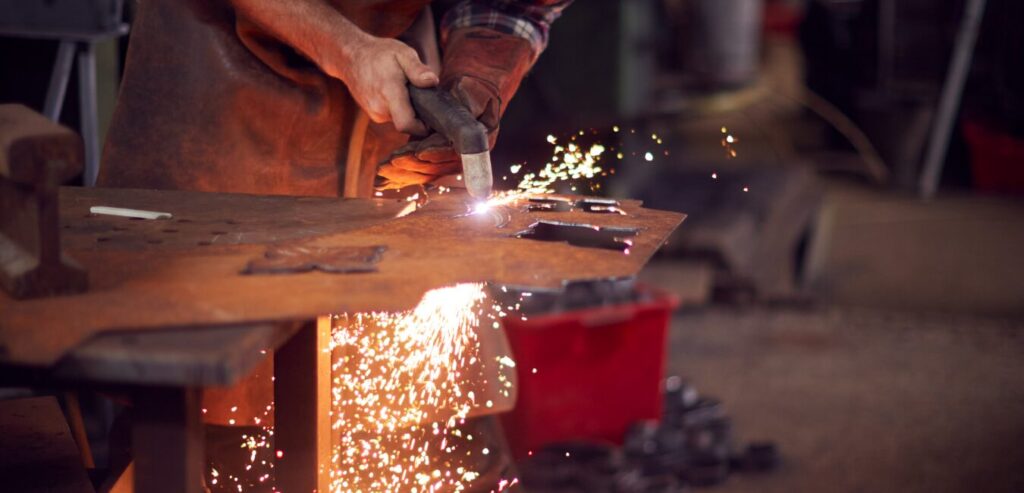
If you cut metal for a living or even occasionally, you have two main options sitting on the shelf: a plasma cutter and an oxy-acetylene cutting torch. Both get through steel. But they work differently, handle different materials, and cost differently to run. Understanding the plasma cutting basics and how they compare to oxy-fuel helps you pick the right tool for the job instead of forcing one to do what the other does better.
This post covers what plasma cutting is at a fundamental level, how the two processes differ, and which one fits your work.
What Is Plasma Cutting and How Does It Work
For the plasma cutting basics: a plasma cutter forces compressed air through a small nozzle while an electric arc ionizes the gas into plasma at over 20,000°F. That stream melts through metal and blows the molten material out of the cut.
How does a plasma cutter work in practice? Connect the machine to compressed air, attach the ground clamp, pull the trigger, and guide the tip along your cut line. There is no filler metal, no puddle to manage, and no shielding gas in the traditional sense.
How does a plasma cutter work compared to welding? It is simpler. The compressed air creates the plasma and clears the kerf in one step.
How an Oxy-Acetylene Cutting Torch Works
An oxy-fuel torch preheats steel to its kindling temperature (about 1,600°F), then sends a jet of pure oxygen into the heated zone. The oxygen reacts with the hot steel in an exothermic reaction that burns through the metal.
This requires two gas cylinders (oxygen and acetylene), regulators, hoses, and a multi-tip cutting torch head. The key distinction in the plasma cutter vs oxy acetylene comparison: plasma melts metal with electrical heat, while oxy-fuel burns metal with chemistry. This is why they handle different materials differently.
Plasma Cutting vs Cutting Torch: Side-by-Side
Here is the plasma cutting vs cutting torch comparison across the factors that matter most:
| Factor | Plasma Cutting | Oxy-Acetylene Torch |
|---|---|---|
| Cutting method | Electrical arc melts through metal | Chemical reaction burns through metal |
| Materials | Steel, stainless, aluminum, copper, brass | Carbon steel and iron only |
| Max thickness (practical) | 1 to 1.5 inches (handheld) | 6+ inches with the right tip |
| Cut speed on thin metal | Very fast | Slower |
| Cut quality | Clean, narrow kerf, minimal slag | Wider kerf, more slag, more cleanup |
| Heat-affected zone | Small | Larger |
| Preheat required | No | Yes |
| Edge quality | Smooth, ready for welding | Rougher, may need grinding |
| Portability | Needs electricity and compressed air | Fully portable with gas bottles |
| Operating cost | Lower per cut on thin to medium metal | Lower on very thick steel |
When Plasma Is the Better Choice
Plasma wins on speed, cut quality, and material versatility. If you are asking what is plasma cutting best at, these are the situations:
- Cutting steel, stainless, aluminum, copper, or brass under 1 inch thick
- Production cutting where speed and edge quality matter
- Sheet metal and plate work where a narrow kerf saves material
- Cutting bolts, brackets, angle iron, and tube where a torch would overheat the piece
- Projects where you want to weld immediately after cutting without grinding the edge
CryoWeld carries Hypertherm plasma cutters along with consumables and replacement parts at both locations. Hypertherm is the industry standard for handheld plasma cutting, and understanding how a plasma cutter works with their systems is straightforward for anyone who has used a MIG gun.
When a Cutting Torch Is Still the Right Tool
The plasma cutter vs oxy acetylene decision tilts toward oxy-fuel in a few specific situations:
- Cutting carbon steel thicker than 1.5 inches, where a plasma cutter either cannot reach or slows down significantly
- Working in locations without electricity (construction sites, remote field work, farm repairs)
- Heating, bending, and shaping metal in addition to cutting (a plasma cutter only cuts; a torch does multiple jobs)
- Gouging and removing old welds where a broad heat source helps
- Cutting scrap and demolition work where edge quality does not matter
An oxy-acetylene setup is also the standard for brazing, silver soldering, and preheating joints before welding. If you need a multi-purpose heat tool and not just a cutter, a torch rig covers more ground.
CryoWeld supplies oxygen and acetylene cylinders along with regulators, hoses, and cutting torch kits for oxy-fuel setups.
Plasma Cutting Basics: What You Need
If plasma is the right fit, here is the equipment list:
- A plasma cutter sized to your material thickness (30A for 3/8 inch, 60A for 3/4 inch, 80A+ for 1 inch)
- Clean, dry compressed air at 60 to 90 psi with a moisture trap
- Consumables: electrode, nozzle, swirl ring, shield cup
- Safety gear: shade 5 to 8 glasses or cutting shield, leather gloves, ear protection
One plasma cutting basics detail beginners miss: cut quality depends on travel speed and standoff distance. Too fast and the arc cannot keep up. Too slow and you get dross on the bottom edge. Keep a 1/16 to 1/8 inch standoff and move steadily at the machine’s rated speed for best results.
Getting Set Up at CryoWeld
Whether the plasma cutter vs oxy acetylene decision has you leaning toward one or both, CryoWeld carries the equipment for either setup. Hypertherm plasma cutters for clean, fast cuts on mixed metals. Oxygen and acetylene setups for heavy steel, heating, and multi-purpose torch work.
Stop by Poughkeepsie or Lake Katrine in the Hudson Valley. Call Poughkeepsie at (845) 473-3357 or Lake Katrine at (845) 336-8680, weekdays 8 to 5. Or visit cryoweld.com.
FAQs
What is the difference between plasma cutting and oxy-acetylene cutting?
Plasma uses an electrical arc to superheat compressed air into plasma, which melts through metal. Oxy-acetylene preheats steel and then uses a pure oxygen jet to burn through it via a chemical reaction. Plasma cuts more materials and produces cleaner edges. Oxy-fuel cuts thicker carbon steel and works without electricity.
Is plasma cutting better than a cutting torch for steel?
For steel under 1 inch thick, plasma is faster, cleaner, and produces a narrower kerf with less heat distortion. For steel over 1.5 inches, oxy-fuel is more practical. For carbon steel in the 1 to 1.5 inch range, both work, but plasma gives a better edge.
What materials can a plasma cutter cut that a torch cannot?
Stainless steel, aluminum, copper, brass, and other non-ferrous metals. An oxy-fuel torch only cuts carbon steel and iron because it relies on a chemical oxidation reaction that non-ferrous metals do not support.
How thick of metal can a plasma cutter cut?
Handheld plasma cutters typically max out at 1 to 1.5 inches depending on amperage. A 60-amp machine cuts cleanly up to about 3/4 inch. An 80-amp machine handles 1 inch. Mechanized (CNC) plasma systems cut up to 2 to 3 inches but are not handheld.
Do you need gas for a plasma cutter the same way you do for a cutting torch?
Plasma cutters use compressed air as the primary gas, which most shops already have. Some specialty applications use nitrogen or argon. An oxy-fuel torch requires two separate gas cylinders (oxygen and fuel gas) with regulators and hoses for each. Plasma’s gas requirement is simpler and cheaper to supply.