
Single-Stage vs. Two-Stage Oxygen Regulators for High-Volume Cutting
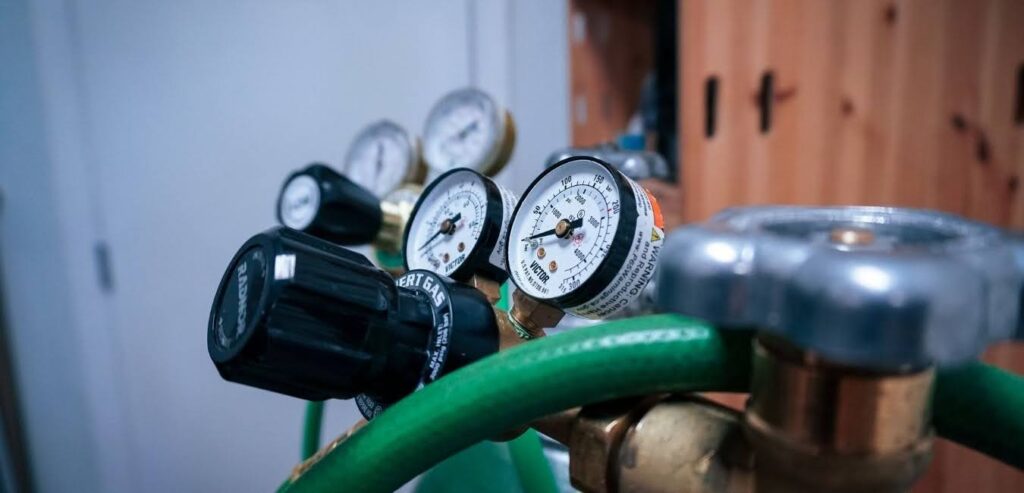
If your cutting pressure drops during long runs or you are constantly adjusting the regulator as the cylinder empties, the issue is usually the regulator design, not the cylinder. A single-stage vs. two-stage regulator comparison explains why. The two types handle pressure differently, and the one you need depends on how much cutting you do and how consistent your flame needs to be.
How single-stage regulators work
A single-stage regulator reduces cylinder pressure to your delivery (working) pressure in one step. Inside the body, a single diaphragm and spring control the outlet pressure based on the setting you dial in.
This design works well for most welding and light cutting. It is simple, reliable, and less expensive than a two-stage unit. Most small shops and occasional oxy-fuel users run single-stage regulators without problems.
The trade-off
As the cylinder empties, the inlet pressure drops on a single-stage regulator, that drop affects the outlet pressure. You may notice your delivery pressure creeping up slightly as the cylinder runs down. This is called “supply pressure effect.” For short cuts and intermittent use, you can compensate by adjusting the regulator. For long production runs, the drift becomes a nuisance.
How two-stage regulators work
A two-stage regulator reduces pressure in two steps. The first stage brings cylinder pressure down to a fixed intermediate pressure (typically around 200 to 400 psi). The second stage reduces that intermediate pressure to your working delivery pressure.
Because the second stage sees a relatively constant inlet pressure regardless of how full the cylinder is, the delivery pressure stays stable from a full cylinder to a nearly empty one. You set it once, and it holds.
How the two types compare
The single-stage vs. two-stage regulator difference matters most when cutting volume is high and consistency is critical.
| Feature | Single stage | Two stage |
|---|---|---|
| Pressure reduction | One step | Two steps |
| Delivery pressure stability | Drifts as cylinder empties | Stays consistent |
| Flow stability (droop) | Low droop at varying flow rates | More droop under flow changes |
| Adjustment needed | Periodic, as cylinder pressure drops | Minimal once set |
| Cost | Lower | Higher |
| Best for | Intermittent welding and light cutting | Production cutting, long runs, precision work |
Regulator pressure drop high volume cutting
Regulator pressure drop during high-volume cutting is the most common reason shops upgrade from single-stage to two-stage. During a long cut on a single-stage regulator, two things happen at once: the cylinder pressure falls as gas flows out, and the high flow rate itself causes a slight pressure dip at the outlet. Both effects change the flame characteristics.
On a short cut, neither matters much. On a production run through 20 feet of 1/2-inch plate, the regulator pressure drop that high-volume cutting creates becomes noticeable. The flame gets leaner, the cut quality changes, and the operator has to stop and readjust. A two-stage regulator holds delivery pressure steady and lets the operator focus on the cut.
Harris Model 601 vs Model 425
The Harris Model 601 vs Model 425 comparison is a good example of the single-stage to two-stage choice for oxygen cutting equipment.
Harris Model 601
The Harris 601 is a single-stage oxygen regulator. It is a solid, affordable unit for welding and light to moderate cutting. It works well in shops where cutting is occasional and the operator can adjust for pressure drift between cylinders. CGA 540 inlet fitting fits standard oxygen cylinders.
Harris Model 425
The Harris 425 is a two-stage oxygen regulator built for higher-volume work. The two-stage design delivers consistent pressure from full to near-empty, making it the better pick for production cutting, long oxy-fuel runs, and applications where flame consistency directly affects cut quality. Same CGA 540 inlet.
| Feature | Harris 601 | Harris 425 |
|---|---|---|
| Stage | Single | Two |
| Best for | Welding, light cutting | Production cutting, heavy oxy-fuel |
| Pressure consistency | Good with periodic adjustment | Consistent without adjustment |
| Cost | Lower | Higher |
If your shop runs a single torch for occasional cuts, the 601 covers it. If you cut all day or run multiple torches off a manifold, the 425 pays for itself in less downtime and better cut quality.
Choosing the right regulator for your shop
Before you buy, consider how you use oxygen and fuel gas:
- How long are your typical cuts? Short, intermittent cuts are fine on a single-stage. Long production cuts benefit from a two-stage.
- How often do you adjust your regulator mid-job? If the answer is “every cylinder,” a two-stage will save time.
- Do you run multiple torches? Manifold setups with multiple outlets draw more gas and increase pressure drop. Two-stage regulators handle this better.
- What is your cylinder usage? High-volume shops that go through multiple cylinders per shift get more consistent results from two-stage units.
Also check that your hoses, safety equipment (flashback arrestors, check valves), and torch are rated for your operating pressure and flow.
Getting regulators and gas apparatus in the Hudson Valley
CryoWeld stocks Harris, Victor, and other major regulator brands at both our Poughkeepsie and Lake Katrine locations. If you are not sure which regulator type fits your cutting volume, bring in your current setup details, and we will match the regulator to your work.
We serve welders, fabricators, and contractors across Dutchess, Ulster, Orange, Putnam, Columbia, and Greene counties. Call Poughkeepsie at (845) 473-3357 or Lake Katrine at (845) 336-8680, weekdays 8 to 5. Or visit cryoweld.com.
Frequently asked questions
Do I need a two-stage regulator for production cutting?
If you cut for extended periods or go through multiple cylinders per shift, yes. A two-stage regulator holds delivery pressure steady as the cylinder empties, so you spend less time adjusting and more time cutting. For intermittent cutting and general welding, a single-stage regulator works fine.
Why does my cutting pressure drop during a long cut?
Single-stage regulators allow delivery pressure to shift as cylinder pressure drops. High gas flow during a long cut accelerates that effect. The fix is either adjusting the regulator during the cut or switching to a two-stage regulator that compensates automatically.
What is the difference between the Harris 601 and 425?
The Harris 601 is a single-stage oxygen regulator suited for welding and light cutting. The Harris 425 is a two-stage oxygen regulator designed for production cutting and heavy oxy-fuel work. The 425 holds delivery pressure more consistently as the cylinder empties, which matters on long cuts and high-volume days.
Can I use a two-stage regulator for welding?
Yes. A two-stage regulator works for both welding and cutting. The consistent pressure is a benefit for welding too, especially on longer TIG runs where stable shielding gas flow matters. The only downside is higher cost, so some shops reserve two-stage units for their cutting stations and use single-stage on welding rigs.
Do acetylene regulators come in two-stage?
Yes, but two-stage acetylene regulators are less common because acetylene cylinder pressures are much lower than oxygen (about 250 psi vs 2,200 psi). The supply pressure effect is smaller with acetylene, so most shops use single-stage acetylene regulators without issues. The bigger pressure stability concern is usually on the oxygen side.