
Welding Gloves by Process: Why TIG Gloves and MIG Gloves Are Not Interchangeable
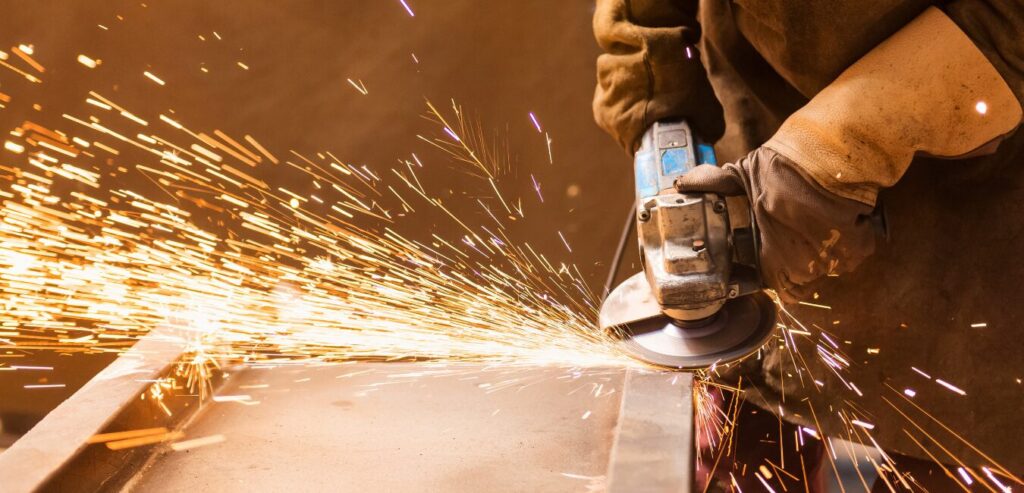
A TIG glove and a MIG glove look similar on the shelf, but they are designed for completely different demands. TIG welding needs finger control to feed a filler rod and manipulate a torch at close range. MIG welding generates more heat and spatter that the glove needs to block. Using a MIG glove for TIG kills your dexterity. Using a TIG glove for MIG burns through the leather. Understanding the TIG welding gloves vs MIG gloves difference is the starting point for picking the best welding gloves by process.
This post breaks down the main welding glove types, what makes each one suited to its process, and how to choose the right pair for how you actually weld.
TIG Welding Gloves vs MIG Gloves: The Core Differences
Here is the side-by-side comparison across the factors that matter:
| Feature | TIG Gloves | MIG Gloves |
|---|---|---|
| Leather thickness | Thin (0.5 to 0.7 mm) | Thick (1.0 to 1.5 mm) |
| Primary leather | Goatskin, kidskin, deerskin | Cowhide, pigskin, elkskin |
| Dexterity | High, tight-fitting fingers | Lower, looser fit |
| Heat protection | Moderate, for lower-heat process | High, for higher-heat process and spatter |
| Cuff length | Short to medium (4 to 6 in) | Long gauntlet (6 to 8+ in) |
| Spatter resistance | Minimal, not designed for it | High, built for direct spatter contact |
| Lining | Unlined or light cotton lining | Wool, cotton, or Kevlar lining |
| Torch control | Excellent finger feel | Adequate but bulkier |
| Best for | TIG, light fabrication, precision work | MIG, stick, flux core, grinding |
Everything traces back to one tradeoff: dexterity versus heat protection.
Why TIG Gloves Dexterity Matters
TIG welding requires you to hold a torch with one hand and feed a thin filler rod with the other. TIG gloves dexterity is the most important feature because without it, you cannot control the rod or maintain a consistent arc gap.
TIG gloves achieve this through:
- Thin, supple leather (goatskin is the standard for softness and heat resistance)
- Snug, form-fitting cut with no excess material at the fingertips
- Minimal or no lining to maintain tactile feedback
- Shorter cuffs that allow wrist flexibility
A TIG torch is a precision instrument. TIG gloves’ dexterity is not a comfort preference. It directly affects weld quality.
The tradeoff: TIG gloves offer less heat protection. They are designed for a process that produces lower heat and almost no spatter. If you use TIG gloves for MIG or stick, the thinner leather will not stop spatter burns.
MIG Welding Gloves Heat Protection
MIG and stick welding produce more radiant heat and molten spatter. The heat protection in MIG gloves is built into every layer:
- Thick cowhide or elk skin outer shell that resists spatter
- Wool, cotton, or Kevlar lining for heat insulation
- Long gauntlet cuffs protecting wrist and forearm
- Reinforced thumb and palm where wear is heaviest
CryoWeld carries Tillman welding gloves in both MIG/stick and TIG configurations. MIG welding gloves heat protection matters most on long welds at high amperage, where the MIG gun radiates significant heat toward your hand. A thin TIG glove in this situation is a burn waiting to happen.
Other Welding Glove Types You Should Know
Beyond TIG and MIG, there are several other welding glove types designed for specific situations:
| Glove Type | Best For | Key Features |
|---|---|---|
| Stick welding gloves | SMAW, heavy fabrication | Thick cowhide, long cuff, similar to MIG but often stiffer |
| Multi-process gloves | Shops switching between MIG and stick | Medium thickness, compromise between dexterity and protection |
| Flux core gloves | FCAW outdoor work | Heavy-duty, extended cuff, high spatter resistance |
| Grinding/cutting gloves | Angle grinding, plasma cutting | Impact-resistant padding, cut-resistant materials |
| Heat-resistant specialty | Furnace work, preheating, post-heat | Aluminized or Kevlar outer, extreme temperature rating |
Understanding the full range of welding glove types helps you pick the best welding gloves by process for every task in your shop, not just MIG and TIG.
How to Choose the Best Welding Gloves by Process
Picking the best welding gloves by process comes down to matching the glove to the heat level, spatter exposure, and dexterity demands of the work:
- TIG welding: goatskin or deerskin, thin, snug fit, short cuff. TIG gloves’ dexterity is the priority.
- MIG welding: cowhide or elk skin, lined, gauntlet cuff. MIG welding gloves heat protection is the priority.
- Stick welding: similar to MIG but often stiffer and longer. Heavy spatter and radiant heat demand maximum coverage.
- Flux core: same requirements as MIG/stick. Field work may call for an even heavier glove with extended cuff.
- Grinding and cutting: skip the welding glove entirely and use a dedicated cut-resistant or impact glove.
Do not try to use one pair for everything. A set of TIG gloves and a set of MIG gloves at your station covers 90 percent of shop needs. Keep both within reach and switch based on what process you are running.
Common Mistakes with Welding Gloves
- Using MIG gloves for TIG because “they are safer.” The extra thickness kills finger feel and your bead quality drops.
- Using TIG gloves for MIG because they are comfortable. Spatter burns through thin goatskin on longer runs.
- Wearing gloves that are too large. Loose gloves catch on workpieces and reduce control.
- Never replacing worn gloves. Holes, hardened leather, and torn stitching mean the glove is no longer protecting you.
Getting Gloves at CryoWeld
CryoWeld stocks Tillman and Jackson Safety welding gloves for TIG, MIG, stick, and multi-process applications.We carry the full range of welding glove types along with helmets, flame-resistant clothing, and other welding safety equipment, plus welding machines, wire, and shielding gas at both Hudson Valley locations.
Stop by Poughkeepsie or Lake Katrine in the Hudson Valley. Call Poughkeepsie at (845) 473-3357 or Lake Katrine at (845) 336-8680, weekdays 8 to 5. Or visit cryoweld.com.
FAQs
What is the difference between TIG and MIG welding gloves?
TIG gloves are made from thin, supple leather (goatskin) for maximum finger dexterity. MIG gloves use thicker cowhide with insulated lining and longer cuffs for heat and spatter protection. TIG prioritizes control. MIG prioritizes shielding from heat and molten metal.
Can you use MIG gloves for TIG welding?
You can, but the thick leather and bulky fit reduce finger control significantly. TIG gloves’ dexterity is critical for feeding filler rod and manipulating the torch. Most TIG welders find MIG gloves too stiff for precision work.
What gloves do TIG welders use for better dexterity?
Thin goatskin or deerskin gloves with a snug, form-fitting cut and minimal or no lining. Brands like Tillman make TIG-specific models with tight finger profiles and short cuffs for maximum wrist flexibility.
What welding gloves offer the most heat protection for MIG welding?
Heavy cowhide or elk skin gloves with Kevlar or wool lining and a long gauntlet cuff. MIG welding gloves heat protection depends on the combination of leather thickness, lining material, and cuff coverage. Look for reinforced thumb and palm areas for added durability.
What material are the best welding gloves made from?
Goatskin for TIG (soft, supple, good heat resistance at lower temps). Cowhide for MIG and stick (tough, durable, high heat and abrasion resistance). Elkskin for heavy-duty applications (extremely heat-resistant and soft when broken in). Deerskin is an alternative to goatskin for TIG work.