
Argon vs. CO2 vs. Argon/CO2 Blends: Choosing the Right MIG Shielding Gas
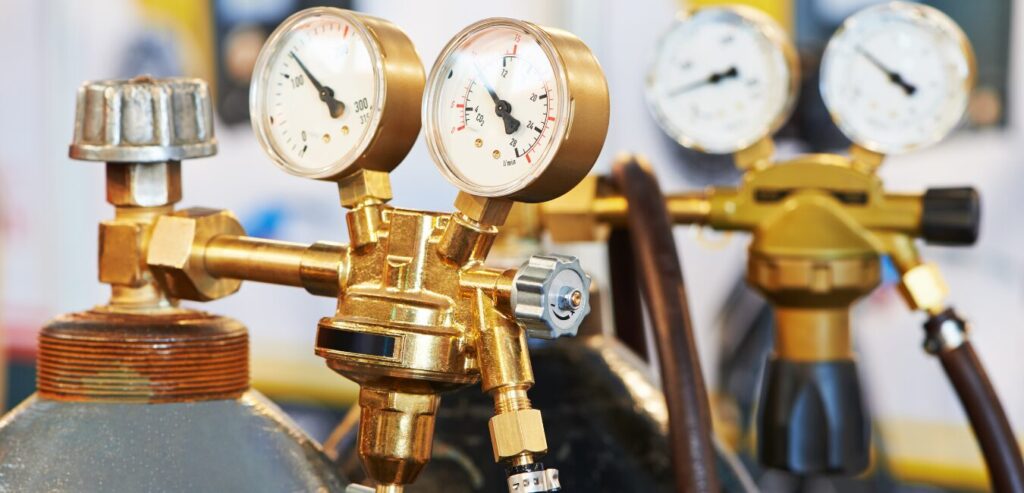
Shielding gas is not just something you hook up and forget. The gas you push through your MIG nozzle affects arc stability, spatter levels, penetration depth, bead appearance, and how the puddle behaves. Picking the wrong gas gives you problems that no amount of voltage and wire speed adjustment will fix. Understanding the argon vs CO2 shielding gas comparison is one of the most practical pieces of MIG welding gas selection knowledge a welder can have.
This post covers what each gas does to the arc, when to use pure gases versus blends, and how to match the gas to your base metal and application.
How Shielding Gas Affects the Weld
Shielding gas protects the molten weld pool from atmospheric contamination (oxygen, nitrogen, moisture). Without it, MIG welds develop porosity, oxidation, and brittleness. But different gases also change the arc characteristics:
- Argon produces a smooth, stable arc with low spatter and a narrow, finger-like penetration profile
- CO2 produces a hotter, more aggressive arc with deeper penetration but more spatter and a wider, flatter bead
- Blends combine the properties of both in proportion to the mix ratio
MIG welding gas selection starts with understanding this tradeoff: argon gives you control and appearance, CO2 gives you heat and penetration, and blends let you dial in a balance between the two.
Pure Argon
100% argon is the standard for MIG welding aluminum and works on stainless steel. On mild steel, pure argon produces a narrow penetration profile with minimal spatter but poor sidewall fusion.
Where pure argon is the best shielding gas for MIG welding:
- Aluminum (all thicknesses)
- Thin stainless steel
- Non-ferrous metals (copper, nickel alloys)
Pure argon is not recommended for carbon steel because the narrow arc does not wet out properly, leading to poor fusion at the bead toes.
Pure CO2
100% CO2 is the cheapest MIG shielding gas and provides the deepest penetration. It creates a hot, digging arc that handles thick material, but produces more spatter and a rougher bead than argon-based gases.
Where pure CO2 works:
- Heavy structural steel where penetration beats appearance
- Budget operations where gas cost is a priority
- Outdoor welding where CO2’s density resists wind slightly better than argon
When evaluating the best shielding gas for MIG welding on thick steel, CO2 alone is fine if cleanup time is acceptable. For anything where the finished weld needs to look clean, a blend is the better path.
Argon/CO2 Blends
Argon CO2 blend welding is the standard for most MIG work on mild steel. The most common mix is 75% argon and 25% CO2 (often called C25). This blend gives you the arc stability and low spatter of argon with enough CO2 to maintain adequate penetration and proper wetting on steel.
Here is how common argon-CO2 blend welding mixes compare:
| Mix Ratio | Arc Character | Spatter | Penetration | Best For |
|---|---|---|---|---|
| 100% Argon | Very smooth, narrow | Very low | Narrow, finger-like | Aluminum, stainless, non-ferrous |
| 95% Ar / 5% CO2 | Smooth, spray transfer | Low | Moderate | Thin steel, spray transfer, pulse MIG |
| 90% Ar / 10% CO2 | Smooth, good wetting | Low | Moderate | General fabrication, auto body |
| 75% Ar / 25% CO2 (C25) | Balanced, stable | Low to moderate | Good | Most mild steel MIG work |
| 100% CO2 | Hot, aggressive | High | Deep, wide | Heavy steel, budget operations |
C25 (75/25) is the best shielding gas for MIG welding in a general-purpose shop. It handles material from sheet metal up to about 3/8 inch, produces clean beads with manageable spatter, and costs less per cubic foot than higher-argon mixes.
For thinner material or spray transfer welding, higher argon percentages (90/10 or 95/5) give a smoother arc and better bead appearance. For thicker structural work where penetration is the priority, straight CO2 or a richer CO2 blend may be appropriate.
CryoWeld stocks argon, CO2, and pre-mixed C25 in multiple cylinder sizes along with flowmeter regulators for every setup.
Shielding Gas for Stainless Steel
Stainless steel MIG welding gas selection uses different blends:
- 98% Ar / 2% CO2: low heat input, minimal carbon pickup, good for thin stainless
- Tri-mix (90% He / 7.5% Ar / 2.5% CO2): better penetration on thicker stainless
- 100% argon: acceptable on thin stainless but poor wetting on thicker joints
CO2 content must stay low on stainless because excess carbon causes carbide precipitation at grain boundaries, leading to intergranular corrosion. The argon vs CO2 shielding gas rules are different for stainless than for mild steel.
Gas Flow Rate
Regardless of which gas you choose, flow rate matters. Set your flowmeter to 15 to 25 CFH for most indoor MIG work.
- Under 15 CFH: insufficient shielding, porosity
- 20 to 25 CFH: ideal range for most applications
- Over 30 CFH: turbulence pulls ambient air into the shielding envelope
Argon-CO2 blend welding at the right flow rate keeps the weld clean. The best gas in the world does not help if the flow is wrong.
Getting the Right Gas at CryoWeld
MIG welding gas selection comes down to matching the gas to the metal and the application. CryoWeld carries argon, CO2, C25, and specialty blends in sizes from small shop cylinders to bulk delivery for high-volume operations. We also stock the welding machines, wire, and torches that your gas connects to.
Stop by Poughkeepsie or Lake Katrine in the Hudson Valley. Call Poughkeepsie at (845) 473-3357 or Lake Katrine at (845) 336-8680, weekdays 8 to 5.
Frequently Asked Questions
Can I use pure CO2 for all MIG welding?
You can use pure CO2 on mild steel, but the arc is rougher, spatter is higher, and bead appearance suffers compared to argon-based blends. Pure CO2 does not work for aluminum or most stainless applications. For general MIG work, a 75/25 argon/CO2 blend is the better all-around choice.
What shielding gas is best for a 75/25 blend?
A 75% argon / 25% CO2 blend (C25) is the industry standard for MIG welding mild steel. It balances arc stability, spatter control, and penetration. CryoWeld stocks C25 as a pre-mixed cylinder, so you do not need to blend it yourself.
Does shielding gas affect weld strength?
Not directly in most cases. The gas affects arc behavior, bead shape, and defect susceptibility (porosity, lack of fusion), which in turn affect joint quality. A weld made with proper shielding in any appropriate gas will meet strength requirements. Bad shielding (wrong gas, insufficient flow, wind disruption) causes defects that weaken the joint.
Can I use the same gas cylinder for MIG and TIG?
Argon works for both MIG and TIG. If you are running a pure argon cylinder for TIG and also MIG welding aluminum, the same cylinder serves both. For MIG welding steel (where you need a blend), a separate C25 or CO2 cylinder is required because TIG uses only pure argon.
How long does a cylinder of shielding gas last?
A standard 80 cubic foot cylinder at a 20 CFH flow rate lasts about 4 hours of continuous welding. A 125 cubic foot cylinder lasts about 6 hours. Actual duration depends on flow rate, duty cycle, and how often you purge the line between welds.
What happens if I run out of shielding gas mid-weld?
The arc continues, but the weld pool is no longer protected. You will see immediate porosity, discoloration, and spatter. Stop welding, replace or refill the cylinder, and grind back to clean metal before resuming. The contaminated section must be removed.