
MIG Gas Mix Selection: 75/25 Argon-CO2 vs. Straight CO2
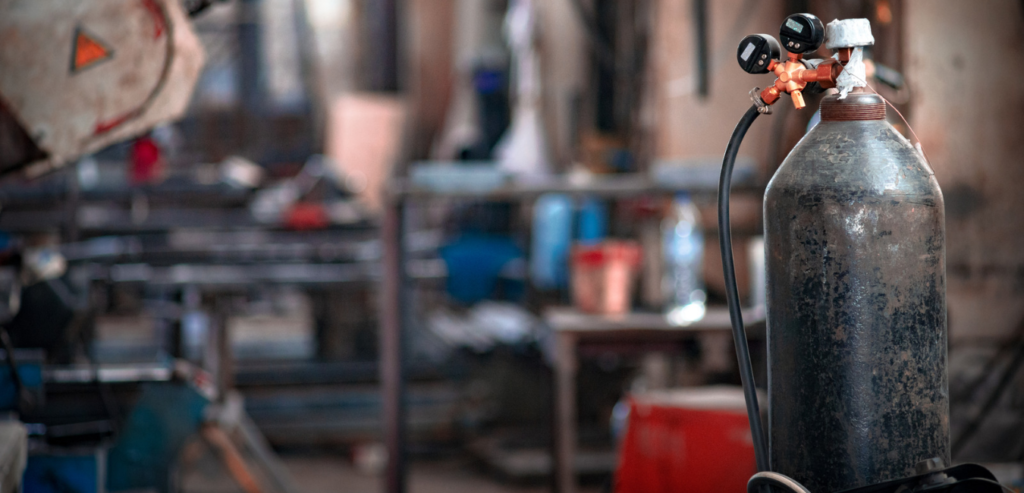
The 75/25 argon CO2 mix is the standard shielding gas for MIG welding mild steel. It gives you a smooth arc, low spatter, and a clean bead. Straight CO2 costs less per cylinder but produces more spatter and a rougher finish. The right choice depends on what you weld, how clean the bead needs to look, and whether the time you save on cleanup is worth the difference in gas cost.
What the 75/25 Mix Does for Your Weld
The 75/25 argon CO2 mix, often called C25, blends 75 percent argon with 25 percent carbon dioxide. Argon is an inert gas that stabilizes the arc and keeps spatter low. The CO2 portion adds penetration and keeps the puddle fluid enough for solid fusion on mild steel.
Most MIG welding machines run well on C25 right out of the box. The gas works in short-circuit transfer on thin material and transitions smoothly into spray transfer on thicker plate when you push the voltage and wire speed up. That range makes C25 the go-to choice for shops that weld different thicknesses throughout the day.
Bead appearance is where the mix shows its value. A C25 weld on mild steel lays flat, ties in at the toes, and needs little to no grinding. For visible welds on railings, furniture, trailers, and structural work that gets painted, the cleaner bead cuts finishing time.
When Straight CO2 Makes Sense for MIG
Straight CO2 MIG welding uses 100 percent carbon dioxide as the shielding gas. CO2 is an active gas, meaning it reacts with the arc and the puddle. That changes the way the weld behaves compared to an argon blend.
The biggest advantage of straight CO2 MIG welding is penetration. The hotter, more aggressive arc digs deeper into the base metal. On heavy plate, structural steel, and thick-wall pipe, that extra penetration can mean fewer passes and stronger root fusion.
The tradeoff is spatter. Straight CO2 MIG welding throws more spatter onto the workpiece and the MIG gun nozzle. You spend more time chipping, grinding, and cleaning after each weld. The arc is also louder and less stable, which makes it harder to hold tight bead profiles on thinner stock.
Cost per cubic foot is where CO2 wins. A cylinder of straight CO2 costs less than a cylinder of C25, and CO2 is available just about everywhere. For farm and ranch repair, heavy equipment work, and jobs where the weld sits behind paint or plate, straight CO2 MIG welding gets the job done at a lower gas cost.
One thing to watch: CO2 cylinders use a CGA-320 valve connection. Argon and argon-CO2 mix cylinders use CGA-580. You cannot swap one onto the other without changing the regulator.
Comparing the Two on Mild Steel
Choosing the best gas mix ratio for mild steel comes down to balancing weld quality against cost and cleanup time. Here is how the two options compare:
| Factor | 75/25 Argon CO2 | Straight CO2 |
|---|---|---|
| Arc stability | Smooth, quiet | Harsher, louder |
| Spatter | Low | High |
| Penetration | Moderate | Deep |
| Bead appearance | Clean, flat | Rougher, more crowned |
| Post-weld cleanup | Minimal | More grinding and chipping |
| Gas cost per cf | Higher | Lower |
| Cylinder connection | CGA-580 | CGA-320 |
For most shops welding mild steel at a range of thicknesses, the 75/25 mix wins on total cost when you factor in labor. The gas itself costs more, but you spend less time grinding and replacing spatter-clogged nozzles and contact tips.
The best gas mix ratio for mild steel shifts toward straight CO2 only when penetration matters more than finish, or when you are welding thick plate and spatter cleanup is already part of the normal workflow.
How Gas Choice Affects Your MIG Setup
Both gases work with standard ER70S-6 welding wire, the most common wire for mild steel MIG. You do not need different wire to switch between C25 and straight CO2.
Flow rate is similar for both. Start at 25 to 30 cfh for most shop work. Increase the flow if you weld in a drafty area or use a longer stickout. Too much flow wastes gas and can actually pull air into the shielding column, causing porosity.
The main hardware difference is the regulator and cylinder valve. A C25 cylinder takes a CGA-580 regulator. A straight CO2 cylinder takes a CGA-320. If your shop runs both gases, you need a regulator for each type.
Some shops keep both on the floor. They run C25 for general fabrication and CO2 for heavy structural work. Others pick one gas and standardize to simplify inventory and avoid swapping regulators between jobs.
Getting the Right Gas in the Hudson Valley
CryoWeld stocks argon-CO2 mix and straight CO2 cylinders at both locations, with exchange and refill options from small portables to full-size tanks. Our counter staff can walk you through cylinder sizing, regulator matching, and gas selection based on what you weld most often.
We serve fabricators, welders, and contractors across Dutchess, Ulster, Orange, Putnam, and Columbia counties. Call our Poughkeepsie team at (845) 473-3357 or Lake Katrine at (845) 336-8680, weekdays 8 to 5. Or visit cryoweld.com.
Frequently Asked Questions
Can I switch between C25 and straight CO2 on the same welder?
Yes. The welder itself does not care which gas you run. You need the correct regulator for each cylinder type, CGA-580 for argon-CO2 mix and CGA-320 for straight CO2. Swap the gas line to the new regulator and adjust your voltage and wire speed to match the gas.
Is the 75/25 argon-CO2 mix the only blend available?
No. Other common ratios include 80/20 and 90/10. Higher argon ratios produce even less spatter and work better in spray transfer mode. C25 is the most widely stocked ratio and covers the broadest range of mild steel MIG applications.
Does gas choice affect how much wire I use?
Not directly. Wire feed speed is set by your amperage and voltage, not the gas. A smoother arc on C25 can reduce the number of restarts, which may save a small amount of wire over a long production run.
What gas should I use for MIG welding stainless steel?
Stainless steel needs a different mix, typically a tri-mix of argon, CO2, and helium, or a 98/2 argon-CO2 blend. Do not use straight CO2 or standard C25 on stainless. The high CO2 content causes carbon pickup that reduces corrosion resistance.
Is straight CO2 safe to use indoors?
Yes, with proper ventilation. CO2 displaces oxygen at high concentrations, so the welding area needs adequate airflow. Follow the same ventilation practices you would use with any MIG shielding gas, and never weld in a sealed space without forced air.