
Welding Wire Storage: Why Humidity Ruins Wire Before You Ever Strike an Arc
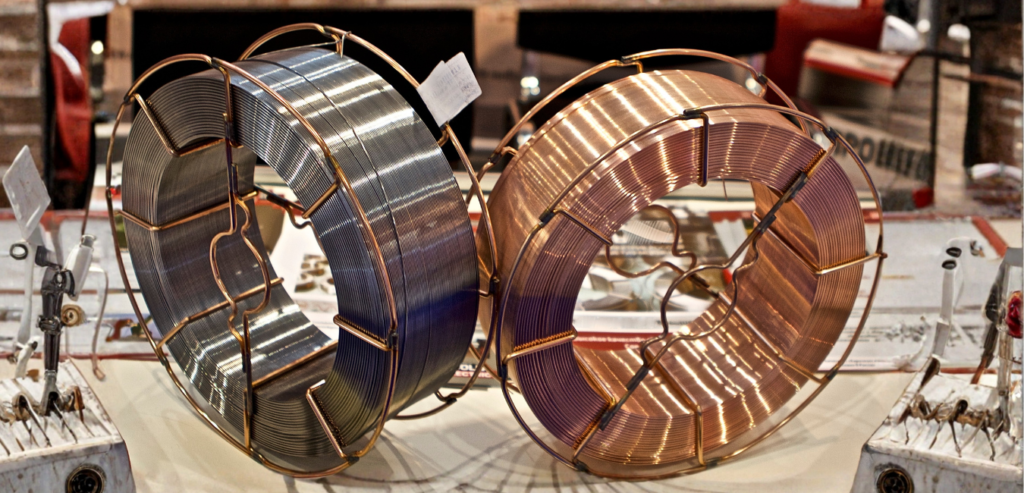
The wire on your spool can go bad before you ever feed it into the gun. Moisture from humid air corrodes the surface, contaminates the flux, and introduces hydrogen into the weld pool. The result is porosity, weak joints, and wasted time chasing arc problems that started on the shelf. Good welding wire storage is the cheapest quality control step in the shop.
How humidity damages welding wire
Moisture attacks welding wire in two ways. On solid MIG wire, it causes surface oxidation and rust. On flux core wire, it penetrates the seam in the tubular sheath and saturates the flux compound inside.
Both paths lead to the same problem. When contaminated wire hits the arc, moisture breaks down into hydrogen and oxygen. Hydrogen dissolves into the molten weld pool and gets trapped as the metal cools, forming gas pockets (porosity) and pinholes that weaken the joint.
Humidity and MIG wire porosity
The link between humidity and MIG wire porosity is direct. A spool of solid wire left in an unheated garage or on a concrete floor picks up surface moisture and begins to oxidize. That oxidation feeds hydrogen into the arc, producing scattered porosity and spatter that was not there when the spool was fresh.
Humidity and MIG wire porosity problems are especially common after seasonal storage. Wire that sat through a humid summer may look fine but run poorly.
Flux core is more vulnerable
Flux core wire absorbs moisture through the seam in its outer sheath. Because the flux is packed inside, you cannot see the contamination. A clean-looking spool can still produce worm tracks, porosity, and hydrogen cracking.
In humid conditions, even overnight exposure of an unprotected spool can absorb enough moisture to affect weld quality. This is why flux core wire shelf life depends on storage conditions, not just age.
Welding wire storage best practices
Proper welding wire storage protects against moisture, temperature swings, and physical damage. These steps apply to solid MIG wire, flux core, and stick electrodes.
Keep it dry
- Store wire indoors at stable room temperature and low humidity.
- Keep spools off bare concrete floors. Concrete retains moisture. Use racks, shelving, pallets, or metal cabinets.
- Keep doors and windows closed in the storage area.
Keep it sealed
- Leave wire in original sealed packaging until use.
- After opening, reseal partial spools in a plastic bag or return them to a storage cabinet.
- For flux core, oven storage between 100 F and 150 F (plastic spools) or up to 300 F (masonite spools) keeps moisture out of open spools.
Rotate stock and acclimate
- Use first-in, first-out (FIFO) rotation. Label spools with the purchase date.
- Do not overbuy. Order what your shop can use within a few months.
- If wire moves from cold storage to a warm shop, let it reach room temperature before opening. The temperature change causes condensation that gets trapped inside.
Flux core wire shelf life
There is no single expiration date for flux core wire shelf life. Manufacturers do not stamp a “use by” date on most spools. Instead, shelf life depends on storage conditions.
Flux core wire stored in sealed packaging at stable temperature and low humidity can last for years without problems. The same wire stored in an open shop with no climate control may absorb enough moisture to cause defects within weeks.
Signs that flux core wire has gone bad: rust spots or discoloration, visible moisture on the spool, porosity or worm tracks in test welds, erratic arc behavior, or wire that feels rough and drags through the liner.
If contamination is minor, some flux core wires can be reconditioned by baking at 230 to 300 F for 6 to 12 hours. Not all wires tolerate rebaking, and wire on plastic spools cannot be heated. Check with the manufacturer first.
Does welding wire go bad?
Yes. Welding wire does not have an expiration date in the traditional sense, but it absolutely degrades over time if storage conditions are poor. The question is not whether the wire is old, but whether it has been exposed to moisture, temperature swings, or physical damage.
Solid MIG wire is more forgiving because its contamination is on the surface and sometimes visible. Flux-cored wire hides its problems inside the sheath.
If you are troubleshooting porosity on a machine that ran fine last week and you have not changed gas, settings, or material, swap in a fresh spool and run a test bead. If the porosity clears, the old spool was the problem.
Does welding wire go bad faster in certain environments? Yes. Coastal shops, unheated garages, outdoor job trailers, and any space without climate control will degrade wire faster than a dry indoor shop.
Stocking and storing wire in the Hudson Valley
CryoWeld stocks solid MIG wire, flux core, and stick electrodes from trusted manufacturers at both our Poughkeepsie and Lake Katrine locations. We can help you match wire to your process, your shielding gas setup, and your storage conditions. If you are dealing with porosity or erratic welds, bring in a sample spool, and we will help you figure out whether the wire, the gas, or the machine settings are the issue.
We serve welders, fabricators, and contractors across Dutchess, Ulster, Orange, Putnam, Columbia, and Greene counties. Call Poughkeepsie at (845) 473-3357 or Lake Katrine at (845) 336-8680, weekdays 8 to 5. Or visit cryoweld.com.
Frequently asked questions
Does welding wire expire or go bad in storage?
It does not carry an expiration date, but it does degrade. Moisture causes surface rust on solid wire and saturates the flux in flux core wire. Both introduce hydrogen into the weld, causing porosity. Wire stored in sealed packaging at room temperature and low humidity lasts for years. Wire left exposed in a humid environment can go bad in weeks.
Why is my MIG weld porous after the wire sat in the garage?
Humidity. A garage without climate control exposes the spool to moisture, temperature swings, and condensation. Surface moisture on the wire introduces hydrogen into the weld pool, which forms porosity as the metal cools. Swap in a fresh spool and run a test bead. If the porosity clears up, the old wire was contaminated.
How long does flux core wire last?
Flux core wire shelf life depends on storage, not age. Sealed spools in a dry, temperature-stable space can last several years. Once opened, flux core wire should be used within a few weeks or stored in a heated cabinet. Wire that shows rust, rough texture, or porosity in test welds should be replaced.
Can I fix wire that has absorbed moisture?
Some flux core wires can be rebaked at 230 to 300 F for 6 to 12 hours to drive off moisture. Wire on plastic spools cannot be heated, and not all flux chemistries tolerate rebaking. Check the manufacturer’s guidelines first. Solid MIG wire with light surface rust can sometimes be run through a clean contact tip and tested, but heavy oxidation means the spool should be replaced.
What is the best way to store welding wire?
Keep wire in its original sealed packaging, indoors, at stable room temperature, off concrete floors, and in a low-humidity space. Use racks or metal cabinets. Rotate stock first-in, first-out. After opening, reseal partial spools or store them in a heated cabinet if your shop runs flux core regularly.